Rural Housing

Rent to own in Irene, South Dakota.

The housing markets of rural America – at least in Southeast South Dakota – are quite different from those of our urban neighbors.

Net out-migration does that to a community.  The rules change.

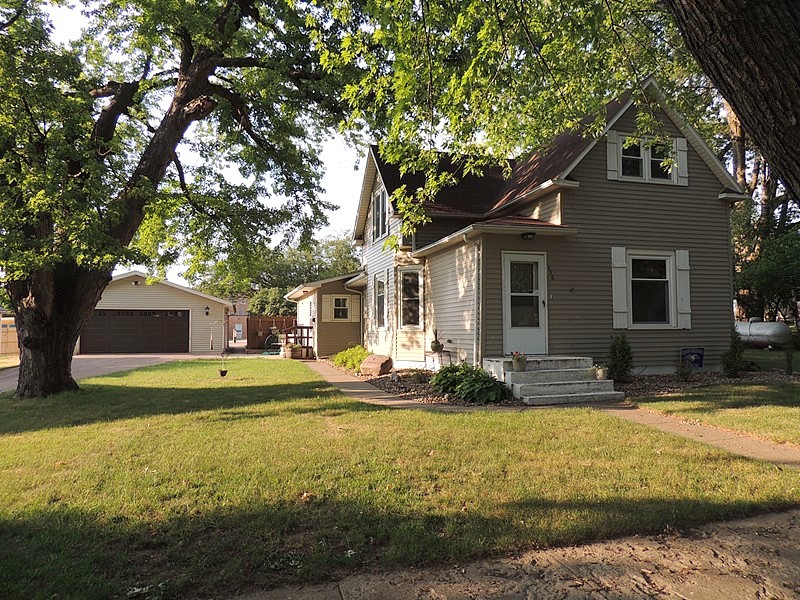
Last week for example, in the neighboring community of Marion,  a three bedroom home with an attached two car garage and a large yard sold on auction for $17,000.  You read that right.

$17,000.

With no one interested in purchasing the home, it was probably picked up by a local who will turn it into a rental property.

Folks here sell their homes on auction because then at least then they can sell it.  Putting a sign in the yard, putting adverts in the paper and finding a real estate agent in no way guarantee a home will sell.

There are any number of homes in Freeman that are for sale and have been for several years now.  Most are quite nice and compared to city prices, relatively inexpensive.  But for our rural area, with so few people looking for a house to buy, they set empty.

For us, we continue to look for our own home to buy or rent here in Freeman or the surrounding area.  For now, by the kindness of friends and the goodness of God, we have a beautiful home which we are house sitting.

It is a major blessing and gives us a few months to discern what our next step will be.

What has been your rural housing experience?

image

Propriety and Personal Economics

I read a chapter from Wendell Berry’s book Life is a Miracle last week that has set me to thinking about the questions we ask ourselves when endeavoring to live a “successful” life and specifically when we think in terms of personal economics.

Berry’s second chapter, Propriety, is no walk in the park, but with the patience to read and possibly to re-read certain sections, I stumbled into a deeper understanding of an issue I’ve long wondered about and questioned.  It is also not directly written toward the idea of personal economy but is much larger in scope taking in technology, innovation and especially, science.  From it however, I’ve found new insight and begun to ask new questions.

It seems that modern American ideals of personal economics are driven by two main questions:

  1. How much do I make? (the goal being to make more and more)
  2. How much does a service or product cost me? (the goal being to pay as little as possible)

These are the two questions that drive personal economics for most with the goal being to earn more money – preferably a lot more – than is spent.  Money can then be saved or spent however one wants which most believe leads to personal happiness.

But this, even as I have acquiesced to it in my own life, has always bothered me.  It seems a short-sighted and somewhat selfish way to live that eventually comes back to haunt us all.

We have bought into the whole notion of upward mobility and the American dream without stopping to consider the ramifications.  We have lived for the pursuit of individual happiness above all else.

How does this work out in life?

  • We drive thirty miles to shop for our groceries where it is “cheaper” rather than getting our groceries from our local grocery store.
  • Our farms get bigger and bigger so we can grow more and more and we no longer have any neighbors.
  • We order online from the cheapest distributer rather than from a local merchant.

And of course in rural America we are paying a terrible price for our reliance on these two questions, these two bastions of capitalism.

  • Our grocery stores are closing down.
  • Our schools are closing.
  • Our churches are closing.
  • Our towns are dying.

Please don’t get me wrong.  I am not against capitalism – I think it is perhaps our best system to live within as far as economics go.  But capitalism based only on t the two goals of making more money and paying less money will always lead to the breakdown of communities.

And that is why, as Berry asserts, a third question must be added and that is the question of propriety.

Is it proper?  Is it appropriate?  Is it good for me and for the community?

Without this question guiding us we will always strive for more rather than enough.  I may save a few dollars paying online, but what am I loosing?

A few months back I stumbled upon a journal from one of the local farmers around our area in Southeast South Dakota.  In it she recorded a bit of each day in that year – 1968.

It snowed a lot that year and so snow removal sets the theme for much of the early months.  The drakes were butchered regularly.  Preparations were made for planting.  Gardens were tended. Doctors were visited.  All the normal mundane things that have happened on farms from time immemorial and many of which still happen today were recorded in her journal.

But there was one recurring entry that impacted me more than any other.  And it went like this:

  • We went to visit the Smith family tonight.  Had a wonderful time.
  • The James family visited Sunday afternoon.
  • Mrs. Frank Thomas came with a pie.  We had a nice visit.

I’ve changed the names to protect the innocent but the theme persisted all year long.  People were coming to visit and going to visit on a weekly basis.

The idea of community was alive and well.

And it is something that, at least in our rural communities, is being lost.

There are many factors we could blame for this of course and I won’t be so naive as to say that our economic choices are the only cause.  But they are part of the cause.

When we begin to ask what is proper, what is appropriate and what is good for the community before we look only to making the most money or getting the cheapest prices, then we will begin to make the choices that will help to sustain our communities.

And that will be good for us as well.

—-

You can find Life is a Miracle at Freeman Public Library like I did, at your local bookstore or at Amazon*.

Read a great review of Life is a Miracle at Against Nothingness.

*Affiliate Link

Friday Poems: We Sit Together

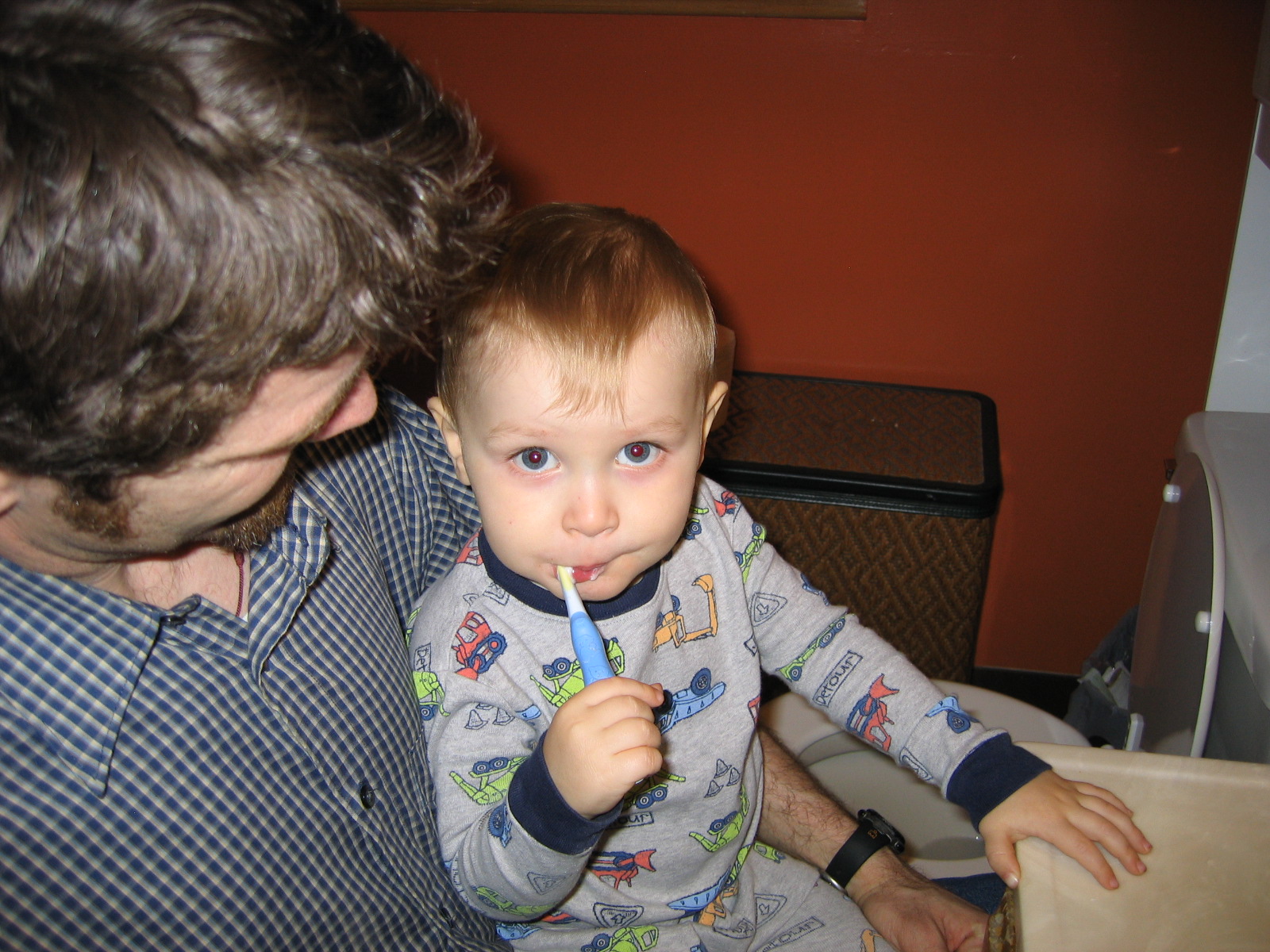
My son and I back in 2006. He was two.

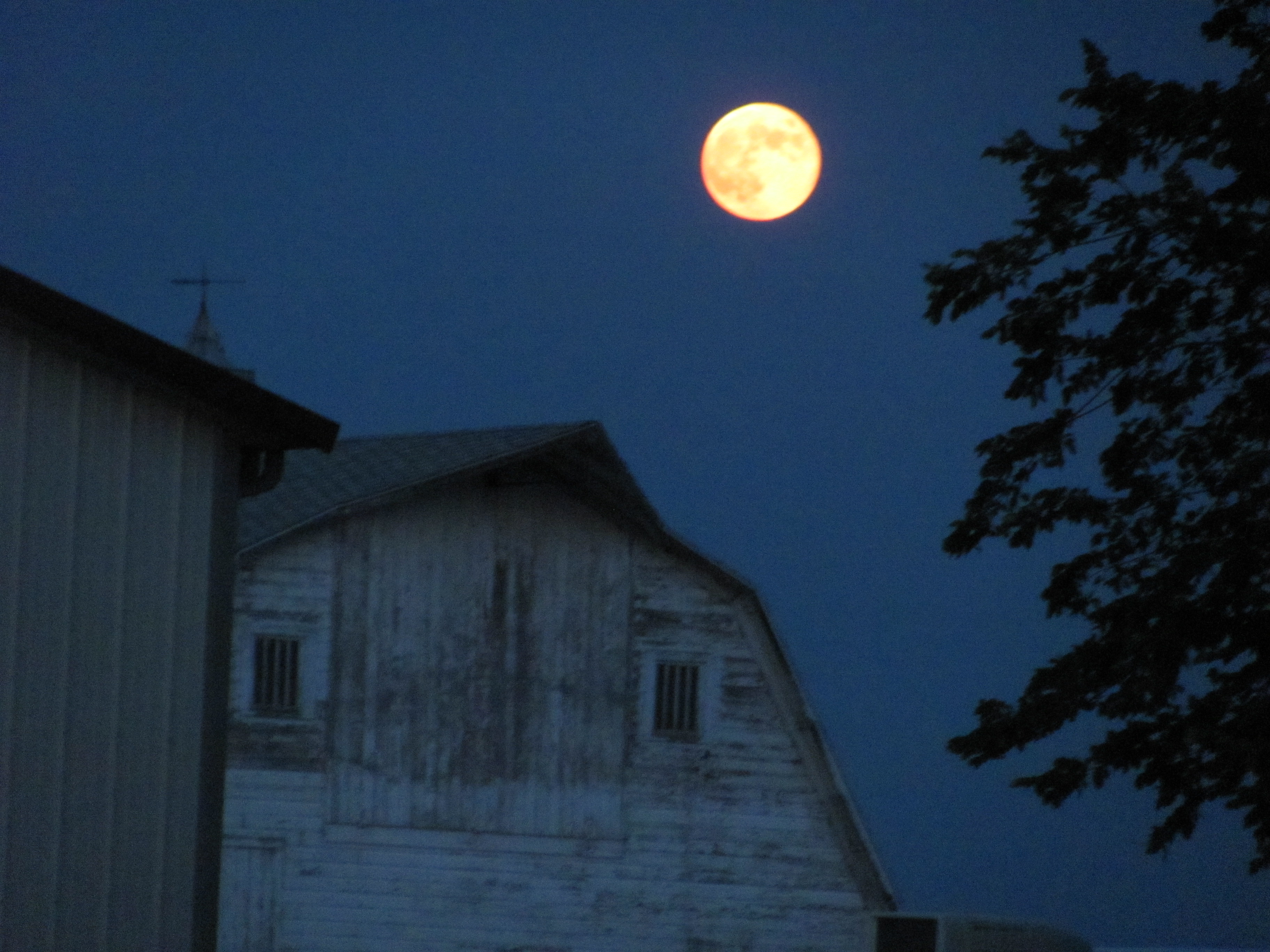
We sit together, you and I

Beneath a moon lit sky,

The stars above

Behold us here,

Grace in celestial eyes.

You are two, I thirty more,

Both travel toward death’s door,

My hope for you

Is nothing less

Than Christ’s eternal shore.

The sky is dark, the night is long,

All heaven sings her song,

The earth is warm,

Our time is sweet,

Enjoy this gentle calm.

And now we go, our sleep to find,

The day has been too kind,

A gentle sun,

The placid breeze,

Recollections of the mind.

Good night my son,

Good night.

October 5, 2006

Abandoned Farms

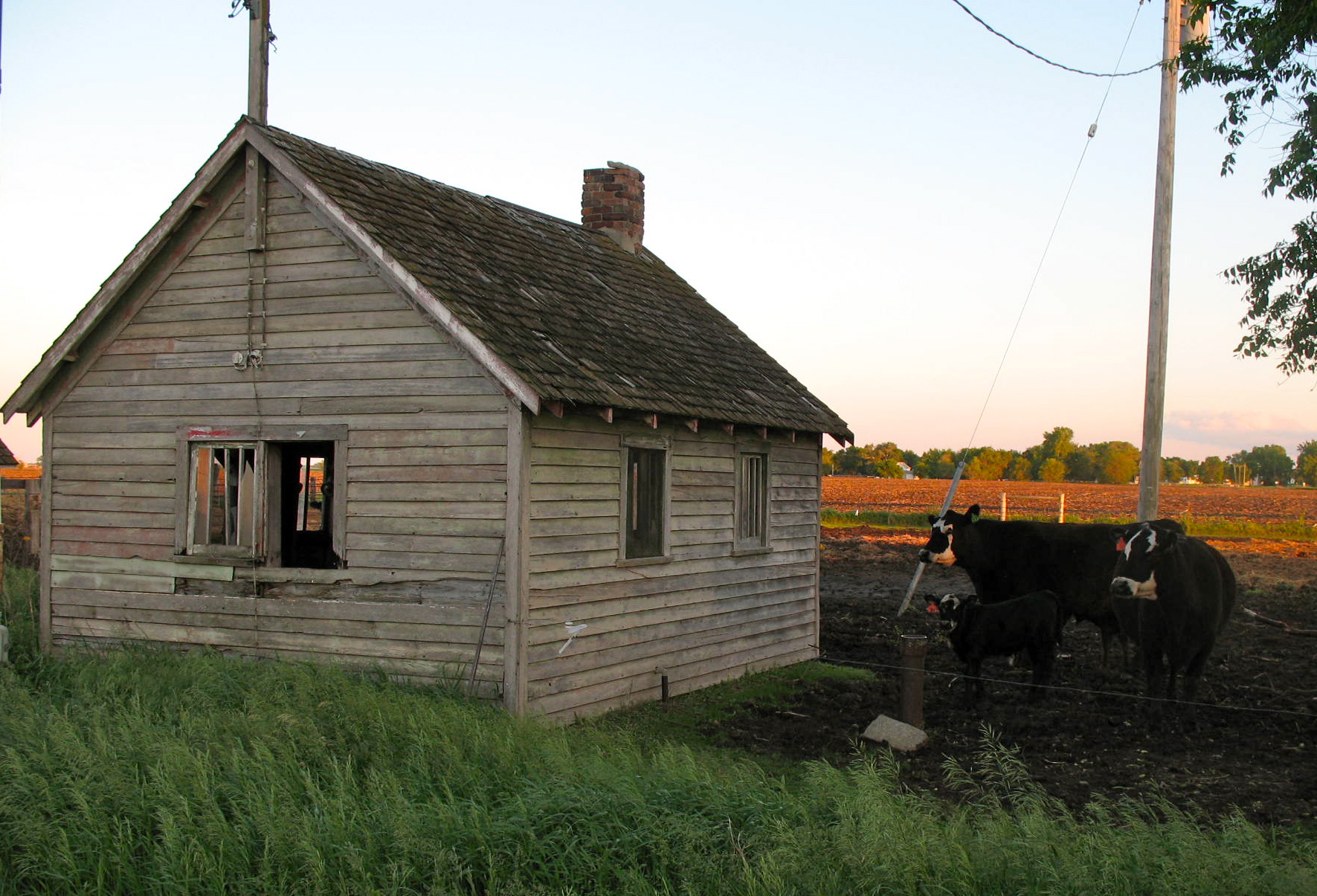
The grass grows up to the foundation, a crumbling remnant of what once was and upon which sits a crooked shamble of  bone dry wood devoid of paint and life.  A front door hangs open, fractured hinges falling forward, trash heaping inside hallow rooms and the life that once was this farm is now gone.

It’s amazing how fast it happens.  A farm is sold – for the land usually – and the house sits empty.  The old houses especially, those built before composite siding and quality paint, compost back into the landscape in a quick succession of years.  A door is left open and the coons and swallows get in.  A tree falls on the roof, punching a hole through so that rain pours in.  Mice invade in droves.

It is sad, for most of these skeletal remains of homesteads could, with a bit of care, have been the future home of the new homesteaders, those urban families looking for a few acres, for the chance to grow their own food and raise a few chickens.

But now they litter the landscape, wooden corpses sinking back into the earth, never to be reclaimed.  They will be bulldozed soon, great piles will rise up.  Dead barns and granaries and homes will be pushed into a great funeral pyre and burned, then buried.

And next year it will all be corn.

Defining Rural Church

One hundred years ago, America was largely a rural nation.  In fact, by some estimates, 90% of the population of the country would have been involved in one way or another with agriculture and with the growing and harvesting of our food.  Today that number has dropped to somewhere between 2% and 5%.

Our country has changed significantly in the last 100 years, not the least of which is our move away from the agrarian ideal.  So too has the church changed, and in particular has the rural church changed.  Kent R. Hunter in his book The Lord’s of the Harvest and the Rural Church published in 1993 defined the rural church this way:

A rural church is a congregation of Christian people who live an agriculturally oriented life-style.  It is a church made up of a people group who belong to the agriculture community.

By Hunter’s definition, I am no longer sure if there is such a thing as a rural church.  When I look at my own congregation I see a changing demographic that can perhaps be categorized into three groups.

  1. Those currently involved in agriculture.
  2. Those who grew up in families involved in agriculture but who are no longer involved in agriculture themselves.
  3. Those who have never been involved in agriculture.

Fifty years ago, group one would have been the majority of the congregation.  Today, group two is the majority and I suspect that in another 20 – 30 years, group three will be the majority.

And so as this shift continues, I wonder if perhaps Hunter’s definition is no longer helpful.  Churches in small, rural locations after all still exist and have far different needs, challenges and opportunities than their urban counterparts.

Is a new definition needed?

I am not one to worry about definitions but I am concerned that we have not fully realized and understood the change that is taking place.  I’d like to continue to explore the topic and will continue to reflect on Hunter’s book as I read.

What I would really like is to see a conversation taking place.

Please feel free to leave your comment and to pass this article on to your rural friends.

You can find The Lord’s of the Harvest and the Rural Church at Amazon. [affiliate link]

Friday Poems: Grey Swept Sky

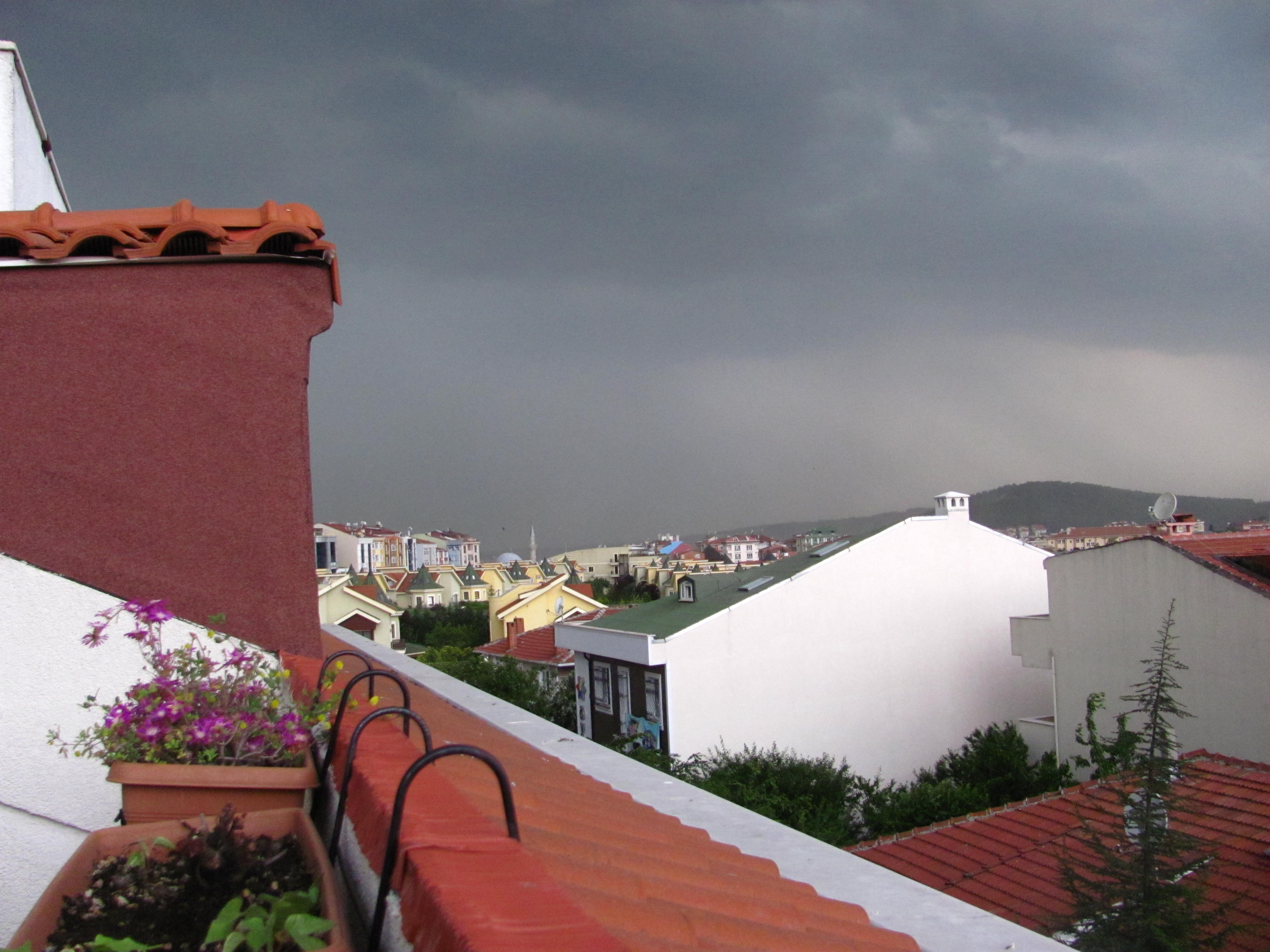
Grey swept skys in Istanbul, Turkey.

Grey swept sky

carries a lonely day

up the steps 

to my backyard.


Clouds come by,

breaking up, coming

again, breaking once more,

then returning with rain.


Lonely day leans with a sigh,

kisses my cheek,

says goodbye–

leaves me with empty remnants

of a once clear day and

of a life gone awry. 

——-

Written sometime in the spring of 2004 in St. Paul, Minnesota.

Why I Use Affiliate Links

If you’ve been following along here at Cobbled Together you will know that one of the topics I wish to write about is my effort to “cobble together” enough income for our family to live on.  For us – at least for now – it’s a little bit here and a little bit there and it’s an adventure to create a life based on our values and our goals for this next season in life.

If you’ve been reading, you will also notice that I often mention something called affiliate links. In today’s post I’d like to take a moment to explain:

  1. What an affiliate link is and how it works.
  2. Why I use affiliate links.

What Are Affiliate Links

Webopedia defines affiliate link in this manner:

In affiliate programs, it’s a special URL that contains the ID or username of the affiliate. This URL is used by the advertiser to track all traffic the affiliate sends to the advertiser’s site as a part of the affiliate program.

Many businesses have affiliate programs.  Amazon Associates is one that I use the most when I write about books but I will also from time promote products from individuals as I did when I wrote about Tent Bloggers Blogging Starter Kit which I also promote on the right sidebar.

The basic gist of these programs is that when someone clicks on a link on my site, a program tells the affiliate program where the new customer came from and then gives a percentage of the sale to me should a purchase be made.

So, if you were to click on one of the book titles in one of my posts, you would be directed to the Amazon sales page.  If you were to purchase that product (or any other product within fifteen minutes), I would get somewhere between 4% and 7% of the sales price.  The price in no way changes for you the customer, I just get a commission so to speak.

While Amazon pays out 4% – 7%, other programs pay out more.  Those hosting their digital products at ejunkie for example pay 50% of the sales price.  This is a great deal for me both as a seller of products and as an affiliate partner for other people’s products.

The aforementioned Blogging Starter Kit is this way for example.  The e-book costs $19.99.  If one of my readers visits and makes the purchase, John over at Tent Blogger would be paid and then would send me 50%  –  $9.99.

As another example, I sell a number of ebooks for language learners from my other site, The Everyday Language Learner.  These ebooks range in price from $2.00 – $20.00 and come as pdf files or bundles of products including pdf files, audio and video files.  In order to streamline the selling and buying process, I host all of my guides at ejunkie, an online store for digital products.  At ejunkie, I also have an affiliate program that you could join.  I too pay a 50% commission.  This works out for me because it gets my products in front of a lot more people.  It is a win-win situation.

Why I Use Affiliate Links

As we returned to South Dakota and as we have laid out a rough vision for what we want our life to look like and what we want to be about, the way forward has led us to not pursue full-time employment working for someone else.

That would leave too little time and energy for accomplishing our goals.

But we still need to earn enough money to pay the bills and feed the kids.  To do that we are working to grow my consultation and writing business online at The Everyday Language Learner, The Turkish Listening Library, Stories from Turkey and Ingilizce Ogrenmek (Learning English).

Income is generated at those sites through the sales of guides for language learners that I have written (you can listen to the audiobook version of my main guide for $3.99 [not an affiliate link]), through Google Adsense and through affiliate links.  Occasional advertizing opportunities also arise and I also offer the Ten Week Journey language course on a donation basis.

I also work as a language coach, which is what I really want to focus on.  This is accomplished over the Internet as well through Skype calls.  Helping people learn languages more effectively, efficiently and to have more fun doing it is what I love to do.

It’s a little bit here an a little bit there and as strange as it seems, it’s working.  Slowly income is growing.

Affiliate links are a part of the overall strategy.   In the old economy it seemed that for every winner there needed to be a loser.  Coca-Cola ran an ad during the nightly sitcom.  They won exposure.  You lost thirty seconds of your time.  Interruption marketing is what Seth Godin calls it.

But with affiliate links, I can write about the things I would naturally write about anyway, things I enjoyed or found helpful, things I would recommend to my friends anyway and irregardless of whether I made a few pennies on it or not.

So that is it. Affiliate links are one part of the quest to pull together a sufficient income to live.  Part of my vocation is that I am a writer.  Affiliate links create a new avenue to leverage that to earn a little bit of money.  Not from you the reader, but from the distributors of products.

Learn More

August 2012 Second Hand Year Report

In my quest to live without buying anything new this year, I’ve decided to document my purchases as much as possible with end of the month round-ups.  This will be the first.

August has been a full month.  The first week found us at a nice debriefing program for expats returning to the states.  It was a great week and really helpful but it was also I think the only time that I broke down and bought anything new for the entire month.  I can’t remember anything else anyway.

The rest of August has been spent back on the farm, recieving the visitations of great friends and now beginning the resettling process.  We’ve made weekly trips to town for food and to visit the library (free books!!!) but I haven’t needed to buy anything really as of yet.

We did start homeschooling the kids and so my wife bought some supplies to get us off the ground.  We also still need to find a place to live but other than that, all is well.

Anyway.  Here is what August looked like as I try and live a second hand life this year.

New Purchases

  • $90.00 worth of books.  Everyone of them has been worth it so far, but had we waited a bit we could have found or ordered used versions of them all I suppose.  Books may be a weakness of mine.  I recently wrote a review of The Lazarus Life which was one of these books.

Second Hand or Free

  • A cell phone.  My mom had an old trac phone which she kindly reformated with a South Dakota number and gave to us for free.  I’ll be working to use it like it’s 1985!
  • TNIV Noteworthy Bible:  $11.00 plus shipping.  I wanted to get a new Bible to start a new season in life and saw someone else’s Bible that had enough space for writing notes and decided I had to have one.  I got this one used from Amazon.  I assume it was purchased and returned or something like that but I ” I’ll see as it’s still on its way.

That is all that I can think for now.  Again, this is just my purchases – it’s my experiment, not my wife and kids.

Anyway, you can see a full run down of the year to date at the Second Hand Year page above.

[some of the links above are affiliate links]