Book Review: The Man Who Quit Money

Money is the root of all evil – an oft quoted maxim that no one I know actually believes.  Belief would lead to action, lead toward an avoidance of the cause of evil, a shunning at least, and if you were an evangelical par chance, maybe even a well organized boycott.

And yet no one I know personally or whom I’ve read about in story has actually quit money.

No one until today.

In The Man Who Quit Money, author Mark Sundeen tells the subversive, interesting and unsettling story of Daniel Suelo.

In the autumn of 2000, Daniel Suelo deposited his worldly wealth – all thirty dollars of it – in a phone booth.  He has lived without money ever since.  And he has never felt so free – or at peace.

So begins the masterfully written story of Daniel Suelo.  Sundeen mixes personal interviews, philosophical extrapolations of the money systems of our world, spiritual journeys, analogies and personal reflection in the telling of Suelo’s twelve years lived without earning even one dime.

While Daniel Suelo’s life is one that few will desire to emulate – he lives in a well stocked cave, eats food found in dumpsters or found in the wild and has no plan for retirement – there is a certain freedom in his bohemian existence that is to be admired.

Living outside of Moab, Utah, he has a rich social life, eats well and maintains a blog from the public library.  Daniel is not one to just pull away from society to live a hermit life of solitude.  Rather, he has decided that living in what he perceives as a broken system is no longer an option.  And so while others work to reform the system, he has decided to live without it.

Suelo’s philosophy on money is highly nuanced, influenced from both the right and the left and in that sense both Tea Party and Occupy Wall Street folks can find kinship in his presence.  His influences include Abbie Hofman, John Birch Society Member, C. Edward Griffin and political reporter for The Nation, William Greider.

He is also influenced by eastern Buddhism, Hinduism, and his own roots, Christianity and the teachings of Jesus.  The son of Plymouth Brethren parents, Suelo abandoned much of his Christian faith on life’s journey.  He embraced an alternative lifestyle, wrote his own theology and wandered the globe in search of enlightenment.

This spiritual journey was of great interest to me as it chronicled this man’s abandonment of the faith his parents professed.  As someone who desires to encourage young men and women to grow in their own faith in Christ, Daniel Suelo’s journey is one from which many lessons can be observed.

His thirst for truth was meted out in the beginning on the Boulder University campus where the Campus Crusade and Inter Varsity groups he had  joined were ill prepared for questions he asked and the spiritual dilemmas he faced.  For him, Evangelicalism was not a safe place to bring his doubts and questions.

Issues of money and greed were especially troubling to him as he observed Christians mixing the American Dream and the faith they professed into a strange brew that little resembled the Jesus he read about in the Bible.

Do not worry about your life, what you will eat or drink; or about your body, what you will wear.  Is not life more important than food, and the body more important than clothes?  Look at the birds of the air;  they do not sow or reap or store away in the barns, and yet your heavenly Father feeds them . . . who of you by worrying can add a single hour to your life?

-Jesus

It was Jesus’ words in the Sermon on the Mount however that eventually convinced him that he actually could give up money.  He’d been hanging on to his last fifty dollars in case of an emergency, something big.  When he left those last thirty dollars in a phone booth in Pennsylvania though, he stepped permanently out of the money system that rules the world and into the life of dependence;  dependence on the goodness of others and for Suelo, of fate.

The story of Daniel Suelo is an interesting one.  As someone who has a subversive streak myself, I enjoyed the questions that this book posed, and left it with new questions of my own.  Sundeen’s writing is well woven, inviting and at 259 pages, can be tackled in a week of reading.

If you are interested in learning a bit more, be sure and watch the video above from the BBC.

I found this book at our great small town library.  You can also order it from Amazon HERE. [affiliate link]

Lemons to Lemon-ade

If you haven’t heard already, much of the Midwest is in a severe drought.  Two summers ago, our county in southeast South Dakota received nearly 30 inches of rain in the months of June, July and August.  This year, we’ve felt the cooling touch of just under two inches.

2010 was abnormal in the greatest sense of the word.  Nothing like that has ever happened before and no one really expects anything quite like that to happen again.  But droughts are part and parcel for the course of a South Dakota farmer’s life.

The last big drought was in the 80’s.  Farm Aid took off then though many lost their farms.  I am no farmer, nor did I grow up on a farm.  Raised in rural Kansas though, many of my friends were farm kids and now I’ve married into a farm family and so I’ve grown to understand at least a bit of the life of a farmer.

One thing I have learned for sure is that farmers, for the most part, are long on faith.  They plant a crop with no real guarantee that anything will come up, or if it does, whether or not it will produce a crop.

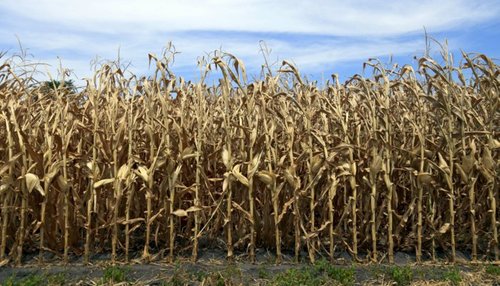
This year is a the type that puts that faith to the test.  The corn came up but then the skies locked up, withholding the rain needed to fill out the cobs, which now resemble mutated dwarves of the corn they should be.  There will be no bumper crop this year.

And so with the bald news of a ruined crop, the farmers in the area do what farmers do best.  They move forward, make some hard choices and begin to cut their corn into silage.

Silage is ground up corn – the whole plant – which is covered and left to ferment and which makes a nutritious feed for cattle.   Cattle prices are up, there’s not much grass left in the pastures and the price of corn is going up too.  So silage makes a lot of sense.

When bad things happen those who can make the most of it and move forward will often come out ahead.  

We can’t make it rain, so there is not much else to do.  We just got to take the lemons life hands out and do our best to make lemon-ade

Life’s like that.  

Fellowship

One of my larger concerns in returning to South Dakota was and has continued to be finding fellowship – for me and for my family.

In Turkey we had good friends – both Turks and other expats – and were continually amazed by the quality of those people, the depth of their faith and the generosity of spirit that we received from the time and again.

So when we visited a small home church last Thursday night in Sioux Falls, we didn’t know what to expect.  Some friends of ours were visiting and so we decided to tag along.

It started well when we found out that they share a meal together before meeting each week.  Food is often a prime ingredient to fellowship and as a bonus there was an amazing artichoke dish of which I was fortunate enough to be able to indulge in three helpings.

The service was great, but we were blown away with love when they began to ask about our time in Turkey and how we were doing,  how they could help us transition back and if they could pray for us.

And they listened – really listened.  

Afterward I was reminded of a Bonhoeffer quote:

The first service one owes to others in the fellowship consists in listening to them. Just as love of God begins in listening to His Word, so the beginning of love for the brethren is learning to listen to them. It is God’s love for us that He not only gives us His Word but lends us His ear. So it is His work that we do for our brother when we learn to listen to him.

Listening – really listening to others is a powerful action.  We felt how important it was as we shared bits of our story, of our desires for the future and as they responded in generous love and prayer.

I was challenged to do a better job of listening myself.

Where to Live

Tomorrow our lives will return to normal – sort of.  What normal is for us is yet an elusive and somewhat surreal idea that we have not figured out.  But tomorrow we will awake alone.  Just us. Just our nuclear family.

One part of our journey toward the new normal will be to find our own place to call home.  We are staying with our folks for now and their generosity has been great and we all get along really well.  We are blessed that way.

But, we are beginning to feel the need for our own place.  More space is not what we are after, but rather a small corner to call our own.

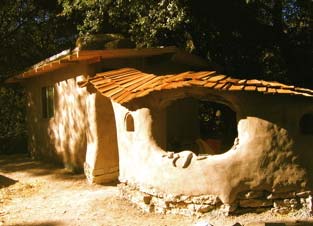
The picture above would be a close rendition of my dream home.

  • Strawbale
  • Off Grid
  • Sustainably Built

And yet our situation leaves us a fair bit off of the road toward that dream.  I am not even sure it is a dream I should work toward – there are so many other variables involved.

For now, we will most likely find something temporary.  And if it works out, I’ll practice a bit on a strawbale home office of my own.

Hopefully.

image

Rain

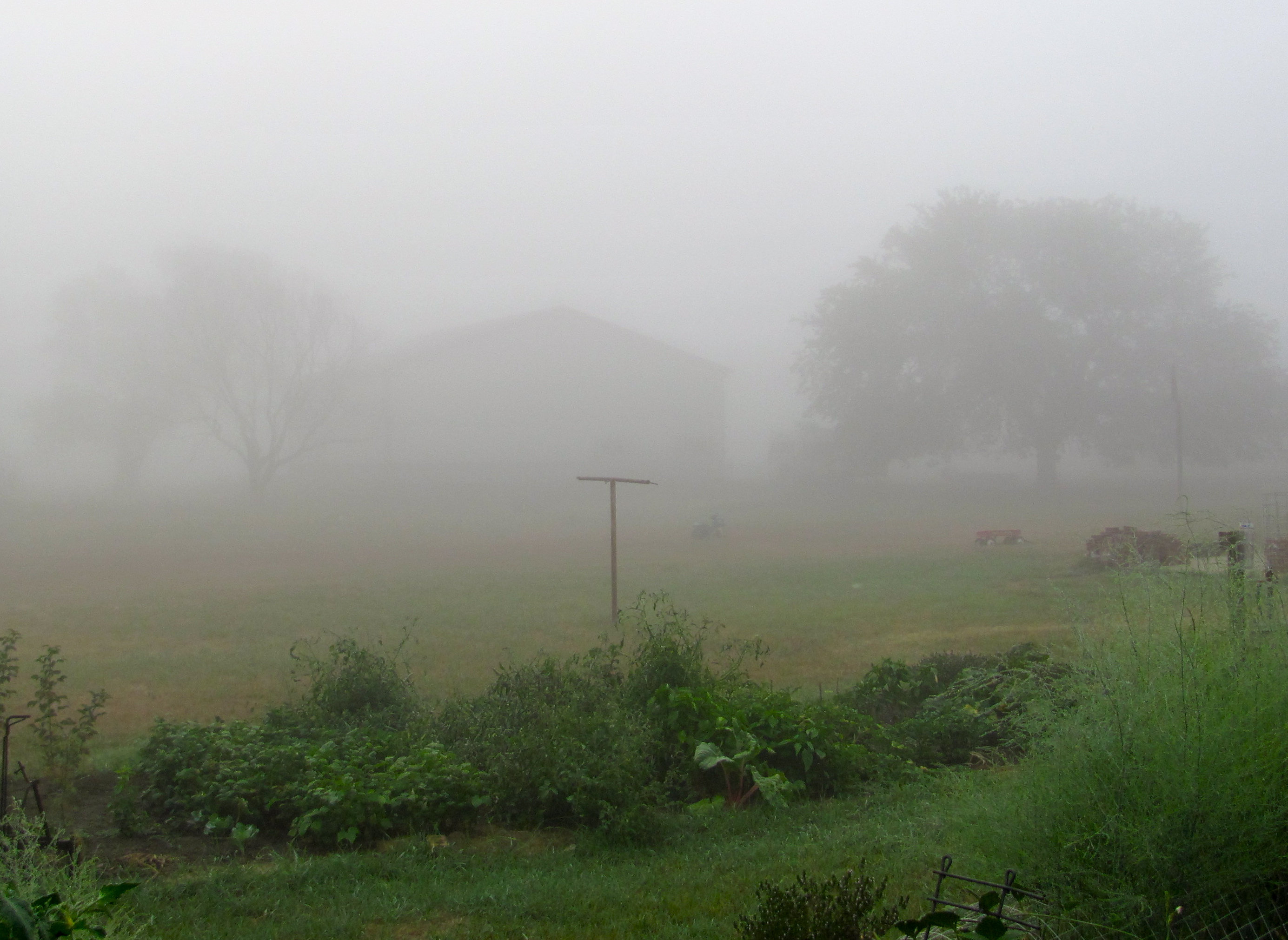
The landscape browns toward crisp, dusty death and has been doing so for three months past.  June, July and August have held back their summer rains – a bit over one inch to be exact.

The dugout is dry.

The trees are greeting autumn in leafy shades of early brown.

The corn is not.

The country roads are ankle deep in dust.

Draught is upon the land, gripping life and squeezing green to brown.

But last night the earth breathed deep in relief as cool rains fell through the early morning dark, as life came again.

image

Thinking About A Home Office

As we begin the journey toward settling down here in South Dakota, I realize that if I am to make my online ventures a reality and if I am be able to carve out the time to write regularly, I am going to need to find a better space to work.

Two years of working from cafes and from the IKEA cafeteria near our kids’ school in Istanbul have taught me to put distraction out of mind, but since I’ll have the space and since two kids and four cousins are a bit more distracting than the regular customers stopping through for a bite to eat or a cup of tea, I’d like to take some time to construct a home office.

As is fitting to this time and place in life, I’ll work to cobble together this structure from second-hand and natural materials that I can find around the surrounding countryside.  My desire is to build a small straw-bale structure that will be an energy-efficient, extremely low cost, creative and environmentally friendly.  Much of this depends on where we settle of course, but we hope to figure that out in the next few weeks.

Strawbale is something I have been reading about for a long time now and so building this will be a great little project to explore this building medium.  It is a fantastic idea and if you’d like to read a bit more about it be sure and visit Building With Strawbales, Straw Bale, or House of Straw.   I’ll also try and document each step of the building process.

What does this mean?

  • Strawbale Insulated Walls
  • Earthen Floor
  • Recycled windows and doors
  • Living roof
  • Low impact foundation
  • Minimal use of concrete
  • Natural plaster finish
  • Recycled wood or trees from the surrounding countryside

A Few Pictures

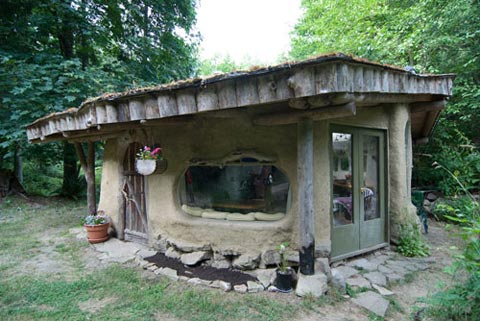
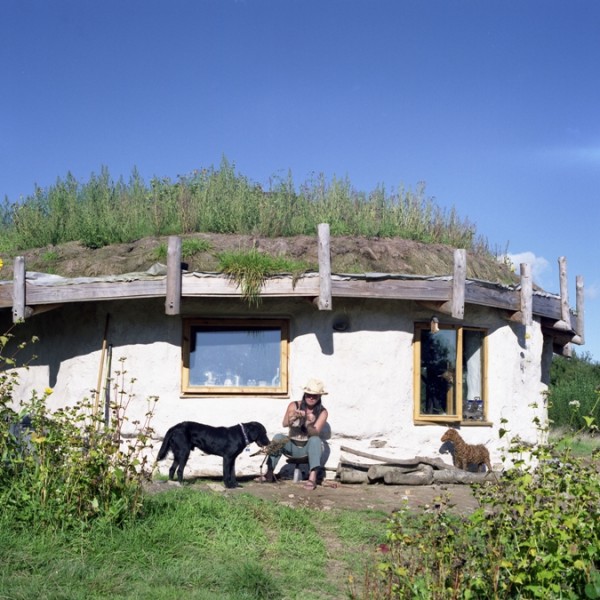
In all of this, I really have a loose dream of what I want to build.  Hobbit House is the description that I most quickly gravitate toward, but in reality, the materials that I am able or unable to procure will probably impact building decisions more than any other factor.  In the end, I’ll leave it to “We’ll see how it goes,” get started and adjust as I go.

Here are a few pictures I’ve found online, along with the picture at the top of the post, that have inspired me in this pursuit.

Things I Love

I was going back through some old writing from my first year in Turkey and came across this.  Enjoy.

Reflecting last evening in the full moon brightness of our small balcony, I began to recount in my mind the things that I love. Not like ice cream or apple pie, but the moments in this journey called life that bring fully laden joy to the everyday, those things that make you shudder with delight, make you catch your breath, make you wish like crazy that someone would invent a camera that would capture the emotion along with the action. I thought of a few and perhaps will add more later.

1

I was putting the kids to bed last night, a raucous event on our house because we have no set routine or schedule other than brushing teeth and putting on pajamas. It sometimes goes quickly, sometimes drags on for over an hour, but is nothing like our baby wise friends whose kids kiss them goodnight and lay quietly in the stillness until sleep overtakes them. No. We get water, we get toys, we read books, we play bank, turn off the light and slow down and try something new. Last night Malachi was the sleepy one and quickly faded into his deep, undisturbable slumber. Sonora, her usual self was a bundle of energy and like most nights, I tried a lot of different approaches before giving up in frustration and pulling in beside her on her twin bed. As she continued her endless babble with her dolls I lay there in the dark pleading with God to make her fall asleep.

God replied, “Don’t you like the daughter I gave you?”

“Well, yes, of course I do. It’s just. . . Well, I have a lot to do.”

God replied, “More important than being with your daughter?”

“Well . . . , no. Not really, but she needs the sleep and, um, um,”

I gave up. I watched her play. I listened to the ways she talked differently to each of her dolls as she practiced mothering them, the way she covered them up and gave them bottles.Then suddenly she was done. She put her dolls down. She picked up her blanky and crawled down to the end of the bed where my head was, plopped her blanky on my shoulder, her head on her blanky and threw her arm across my chest. She snuggled in, drew closer, gave a deep sigh and fell asleep. Just like that. I listened to her breathing for some time, felt her, even in sleep drawing close to me. I sighed, wrapped my arms around her and whispered into the dark of the night, “Thank You.”

2

Malachi learned to pray from a worm. Its name is Hermie and he is the creation of Max Luccado, but Malachi learned to pray from him. They are frank prayers; clear, direct, open-eyed and said to a God who might be sitting on the edge of the bed next to him listening intently. I hope he always prays like this, especially in church in front of people because it will make everyone uncomfortable. Last fall, we were returning to the farm on a cold star filled November night. Malachi was in his car seat looking out the window. I am not sure what was going on in his head, but he had then recently been asking a lot of questions about God and where he was and such. Anyway, the car was quiet except for the sound of the tires on frozen pavement when Malachi’s voice broke into the silence. He sounded urgent and a little frustrated.

“Hey God. Could you come down a little closer so I can hear you. I can’t hear you way up there.”

That was it. His prayer to God to come near. Now we are in Turkey and Malachi still prays in his frank, Hermie way. Last week his gold fish ‘Fishy’ was sick and had not been doing much besides floating in his coffee cup fish house. I was pretty sure the fish was a goner. Malachi was distraught. So we suggested he pray for the fish. Malachi stepped up to the table and looked into the tank.

“God. Fishy is sick. Can you heal him so he won’t die. Thanks.”

The next morning, Fishy was swimming around his tank looking much healthier than the day before.

3

Soccer is big here. It is big everywhere in the world outside of the U.S. of course, but last month I came to a new understanding, appreciation and love for the game and what I am learning it represents. Euro Cup 2008 was in June. Turkey competed and put on a strong showing. Fielding a team depleted by injuries, they lost in the semi finals to Germany. We watched every game even though they started at 9:45 pm. It was a great run and amazingly fun to see a nation come alive to cheer for their team. It is a phenomenon we can’t understand in the states. It highlights the collective consciousness that seems to mark this culture in stark contrast to the individualistic culture of the states. During the Euro Cup, 70 million Turks sat together in front of the television, a monolithic mass of frenzied fans all pulling in the same direction on the cosmic gods of soccer. The first goal we scored brought the neighborhood to its feet in shrill delight and loud screaming that carried out their open windows, mixed with their neighbors cheers out in the streets and came in through our open windows. It was loud and startled us and sent us giddily running for the camera, rushing out on our balcony, hoping to video a bit of what no one back home would believe. Every goal for two weeks was like this and sometimes if the goal was near the end of the game and if the victory was imminent, fireworks would burst into the night sky as well. We cheered our team on together. This open windowed sharing of mirth and enthusiasm for the team is reflective of the corporate nature of the culture. I had read about this idea, corporate versus individual, but had never quite grasped its depth. Not that I grasp it now, but I am beginning to understand. When our man Nihat scored in the last-minute to cap a three goal rally in the final fifteen minutes of our game against Czechoslovakia, I jumped to my feet with 70 million Turks, ran to our open window and leaning out, hollered my ecstasy into the streets of our great, corporate, victorious night.

The Far Country

“God is at home. We are in the far country.”
-Meister Eckhart

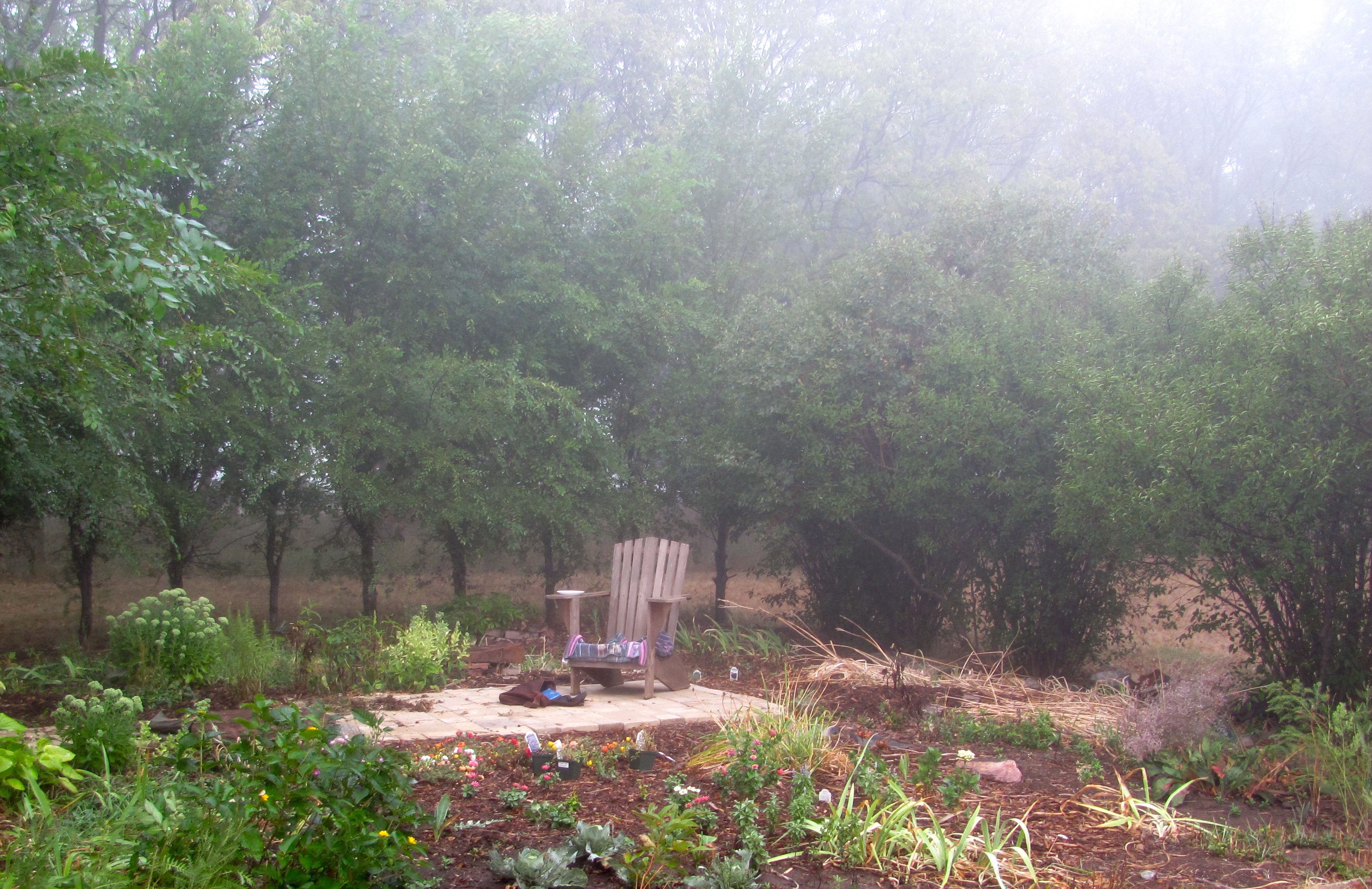
A favorite singer songwriter of mine, Andrew Peterson, has an album called “The Far Country.” He writes of finding the above quote in an Annie Dillard book. Coming across the quote tonight sparked in me a notion that the far country is indeed where we are all living.

It seems common for people to ask us how it was living away from “home?”

We spent the last four and a half years living in Turkey and it was indeed different from the place we grew up, from the quiet streets of Freeman and known sounds and meanings of English.

But we are no more at home here than we were there.

Indeed, none of us are.

We are all passing through. We are all on the way. We are strangers in a strange land and we would do well not to forget it lest we grow accustomed, comfortable and some how in that comfort, lose sight of the true home for which we were created.

The journey is not easy, but it does lead us home.

image