Short Story: The Grace of Grief

Short Story: The Grace of Grief

The old man walked into Cost Cutters behind me and as I did, checked in to get a haircut and then found his way to one of the gray, plastic seats along the wall. We made eye contact, shared a nod of greeting. I opened up a book I was reading on my phone. He sat, taking in the surroundings, watching for clues to the room, sitting in the silence of his own thoughts. He slowly unzipped the blue jacket he was wearing and shifted to get comfortable. The snipping of scissors and the happy chatter of hairdressers and clients filled in the cracks of our shared presence. I had but to wait for my turn, for one of the ladies to come and call out, “Aaron.”  I’d stand then and head back for my turn in the chair and the chatter. 

But before my name could be called another old man appeared just ahead of the lady who had just finished cutting his hair. She walked behind the counter, he in front and, and as he struggled to pull his wallet from a back pocket that had moved beyond the reach of rusty shoulder joints, asked with a wrinkled, mischievous grin, “Do I get the senior discount with that?

I and the other man shared a chuckle at the interaction as the lady grinned back, “I’m afraid not today.”

The man in the gray chair, feeling a sense of camaraderie with a fellow gray hair joined in, “We’re not old enough for a discount yet, are we?” I wondered if these two knew one another, old friends who’d stumbled into one another at the barbershop. But the man at the counter turned, slowly shuffling one foot and then the next below a body that no longer twisted with youth. He nodded a greeting to this stranger and said, “Well, I don’t know. How old are you?

The man four chairs down from me replied with a proud, knowing smile, “Seventy seven.

The man at the counter, now with wallet in hand, looked down as if doing math in his head. “I’ll be seventy seven in four months.” he finally replied, handing a twenty to the lady at the register.

The man who’d asked adjusted his John Deere baseball hat and then a new thought found its way into another question, “Do you remember when we could get a haircut for a dollar?” It was an effort toward commiseration over living lives through shared decades. The other man stood, still and silent now, wallet open in his left hand waiting to receive the change clutched in his right. The smile had left his face. After a moment, he shoved the money into the wallet and struggled to get it back into his pocket. “I guess I don’t remember. My wife always cut my hair. I was just twenty one when we got married so I never really went to the barber.” His voice was a quiet tremble. “I lost her six years ago.”  

The other man took his hat off then. His hair was thinning and he looked down into his lap. I thought he might say he was sorry for the other’s loss but looking up with sad eyes he replied, “I lost my wife last year.” The pain of shared loss hung in the air.  

The man standing alone at the counter was first to speak. “I’m sorry for your loss.” He looked down then fumbling with a button at his jacket. He let out a quiet sigh. “It’s hard. It gets better but it’s still hard.” Looking back up he took a step closer. I watched and waited. The lady behind the counter waited and watched. 

The man in the chair sat up a bit and pulled his hat back on, attempting to pull himself together, as if to meet grief with grief, as if to say thank you for understanding. “It’s been a lot harder than I would have imagined.” He looked up with questioning eyes. “What’s been the hardest thing for you?

It was a question that seemed expected, as if this were a question every widower asks himself. In reply the other took another step forward. They were within a few feet of each other now, moving into one another’s stories, feeling one another’s pain. “I suppose one of the hardest things is the grocery store. I’ll be pushing my cart, all alone and I’ll come around a corner and there’ll be an old couple in front of me and they’ll be holding hands. They’ll be together and I’ll just be alone.”  

The other nodded beneath his green hat and said again, “It’s hard.

One man standing shoved his hands deep into his pockets. Another, sitting, sank back into his chair a little. They nodded at one another. The old man standing in the middle of the white tiled barbershop entry took one final step forward, reached out his hand. The old man sitting leaned forward, took the hand in his own and they held their grip for a long moment.   

The man standing before the other released his grip saying, “Well, hang in there. Every once in a while you’ll notice it’s a little easier. It’ll still be hard a lot of days but some days will be easier.

Thank you” A sense of calm mixed with loss filled sad eyes. He had been heard and understood. With that the man turned and hobbled out the door. I watched him go. The hairdresser behind the counter watched him go. The grace of grief lingered broken only by the sound of my name being called, “Aaron.”


photo credit

The Danger of a Single Story . . . and a Billion Stories Too

The Danger of a Single Story . . .  and a Billion Stories Too

In October of 2006, Chimamanda Adichie gave what has become one of the most watched TED talks of our time. If you’ve not listened to her talk, it’s worth taking 20 minutes to listen now. In her talk, Adichie recounts her journey to America and her first encounters with people who had a single story of Africa: poor, uneducated and war torn. Having been raised in an upper middle class home, where English is an official language, none of these images were true for her or her friends. Her talk highlights the danger of allowing ourselves to be drawn into understandings of our world through a single story.

When American’s watch the nightly news and assume all Muslims are terrorists and when Muslims in the Middle East watch a steady diet of Hollywood films and assume all Americans are immoral adulterers they are both subject to the snare of the single story. While most stereotypes carry in them fragments of the truth, they are almost always formed in the cauldron of a single story; one person’s experience or opinion, one event broadcast in the nightly news, one book published by one author. The danger of a single story is one that we must all be aware of and watchful for if we are to be thoughtful, grace filled citizens of our world. We must be wary of the temptation to sequester ourselves in a few ideologically driven news outlets. We must watch that we do not simply allow ourselves to hear the things that our ears want to hear. We must read widely and pursue different perspectives if only to challenge ourselves to be critical thinkers. C.S. Lewis once famously advised readers to “Read everything. Read receptively. Repeat.

While the danger of a single story is real, Adichie’s TED talk in October of  2006 preceded the release of the first iPhone a few months later in early 2007. What she did not know then was that the single story would soon be extinct, reserved only for those luddites who shunned smartphones or those ideologues who sequester themselves so deeply into their own little corner of the Internet that they can never hear another opinion. For the rest of us it is a brave new world of information overload; wall to wall, 24/7 access to every bit and bite of information ever produced. We are connected to anyone in the world, anytime we like. Today, a twelve year old with a smart phone in America can easily have more in common with a twelve year old in China than with their own grandparents. The danger is no longer that of a single story but rather, the overload of a billion stories. Like most new technologies, it is a double edged sword with potential for both tremendous good and despicable evil.

When I was a young child there were four TV stations, 15 -20 radio stations; a newspaper or two; we had a public library with a limited number of books. I had a home set of encyclopedias. I had my parents, my friends, my teachers and my pastor and youth pastor. Those were my influences that shaped me and they were essentially the same influences for everyone else in town. These were my ways and means of learning. I was able to be influenced by what was available to me. My parents and youth pastor were at the top of that list.

Today we have access to every movie ever made, there are tens of thousands of TV programs;  there are blogs, podcasts, Youtube, Facebook, Twitter, thousands of news channels all buried neck deep in their own particular ideology; There are archives of sermons – tens of thousands of sermons; Today, the ways and means of learning have changed dramatically. Today, I am able to be influenced by whatever I want to be influenced by and I’m too often influenced by things that I don’t want to be influenced by. And therein lies the danger. We are all susceptible to being dragged down the rabbit hole of information overload. We all struggle increasingly to know what is true or not true. It’s enough to make one’s head spin and is all a bit unsettling.  Where are we headed?

I am no luddite. I don’t in any way think the future is all doom and gloom (even with A.I.). But this is the time to be reflective. To think hard about the challenges that this digital, information age poses for ourselves and especially for our kids. We cannot simply unthinkingly accept these changes without thinking deeply about what the consequences of the dominance of technology might be. We must understand that our children are being shaped by their phones, are being discipled into the people they will become by the billions of messages that swallow them up everytime they look to their screen. We need to read the writers who are thinking deeply about these things. We need to have long, vigorous discussions with our peers about how we will raise our kids in this new environment. We need to learn that, as Dallas Willard points out, “The ultimate freedom we have as human beings is the power to select what we will allow or require our minds to dwell upon.”

Helpful Books:

Image Credit

A New Tradition: Jólabókaflóðið

A New Tradition: Jólabókaflóðið

My wife sent me a text yesterday with a link in it – a thing she only does when she is really excited about something new she has discovered. She’s a bit of a luddite, one of the reasons I love her so much, and so I knew that whatever it was she was wanting me to read online, was going to be interesting.  

Jólabókaflóðið.  She sent me an article about Jólabókaflóðið.

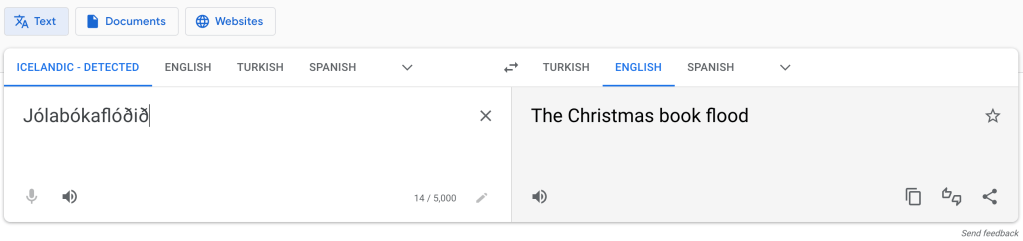
It seems that Jólabókaflóðið (pronounced YO-la-bok-a-flothe) is an Icelandic word meaning something akin to ‘the Christmas book flood.’  It’s a tradition in Iceland that goes back to the days right after the second world war when, because of depression and war era challenges and economic trade restrictions, the one plentiful resource that could be found in Iceland was paper. And because books are made of paper, books quickly became a gift of choice during the holidays. The Icelandic publishing industry began to release all new books in November, a tradition that continues to this day. The yearly publication of a nation wide book catalog, Bókatíðindi, helps everyone there know what’s coming out.  

This seems to have led to a nation of bibliophiles where a good book is the gift of choice and the greatest Christmas pastime is laying in bed, drinking hot chocolate and reading a good book all day long. 

So this year, if yours is a household or readers, what if you chose one day in which all family members agreed to brew a giant caldron of hot chocolate, load up on healthy snacks and spend the entire day reading.  

Find a way to celebrate Jólabókaflóðið together.

You can listen to how Jólabókaflóðið is pronounced at Google Translate.  And you can read a few articles about this amazing Icelandic tradition here and here.

And if you need a good book suggestion, check out our family’s top ten lists for youth fiction at Boo Radley Book Reviews.

Image Credit

Are We Amusing Ourselves to Death?

Are We Amusing Ourselves to Death?

A number of years ago I was riding around the country roads of rural South Dakota near my in-laws’ farm on a four wheeler with my two young kids. We were exploring the countryside, stopping to throw rocks off of low bridges into muddy brown creeks, tracing the arc of a soaring hawk and occasionally, pulling into abandoned farm yards to poke around. There are always surprises to find, history to discover and a story to be told in a leaning barn or crumbling house.  Up one such driveway we found an abandoned home that was still standing, albeit open to the elements from every broken window and dangling door. Like so many of its kind, after the residents moved out, the house became a sort of storage shed, a place to put the things someone didn’t really want around but couldn’t bring themself to throw away. And like so many makeshift storage units, the contents were soon forgotten, overrun by rats and raccoons and the decay of time.  

As we climbed the broken down steps onto the front porch and gazed through the doorway with its screen door clinging crookedly by a single remaining hinge, we wondered about the family that had lived here. How long had they been gone?  Why did they leave? And who dumped the enormous pile of clothes and pots and pans and other household items in the middle of the floor of the kitchen. It looked like a bomb had gone off on moving day.  We stepped inside tentatively, aware that at any moment we might disturb a sleeping raccoon or some other animal that we might not really want to meet. The place was a moldy mess and yet the story of the family that had once lived there still hung in bits and pieces around us. A calendar on the wall, brittle with age, carried in its days the happenings of their weeks. A shelf with a few books destroyed by the rain that poured through a hole in the roof gave hints of their interests – gardening, faith, western novels. The colors of the carpet and curtains – had we been from an older generation – would have inevitably told of the decade they were installed.

It was mostly the tale of the decay and the kids were keen to leave before we stumbled onto something that might bite us. One last look around though revealed something worth exploring several feet from the open doorway. On top of an old heater unit in the living room sat a small, white diary. The cover was embossed with the year, 1969, and inside were page after page of the weekly doings of this family, recorded religiously in the small space for each day of the week. Sundays were nearly always spent at church in the “forenoon”, winter days were regularly accompanied by a note about the temperature – February 3rd hit a low of 12 below and was cloudy – and there were matter of fact notes about the farm chores that were completed on the particular day – January 28th – “Butchered drake (duck)”.  

It all seemed rather normal except for one thing: every week this family would either visit or receive visits from neighbors. Sometimes two and three times a week – almost always in the evenings – there were social visits being made. Community was an ever present part of this family’s life. To my modern experience this seemed odd. Not odd in the crazy uncle sort of way but rather, odd in that we just don’t live like that anymore. We text our friends a few times a week at best but we don’t spend time together, not like they did.  

Something has changed. Something drastic really.  I can find pictures and stories in the archives of any small town newspaper of Saturday nights where hundreds of neighbors showed up on Main street to visit and dance and share life together.  Boys gathered over bottles of Coca Cola to talk about the Yankees and school and girls. Ladies shared recipes and stories and prayers for their children. Men complained about the weather, argued about politics and discussed last week’s sermon. We talk of our small towns as “communities” because they truly used to be communities, places where people regularly “communed”.  We ought perhaps to find a new word to use to describe our communities.  

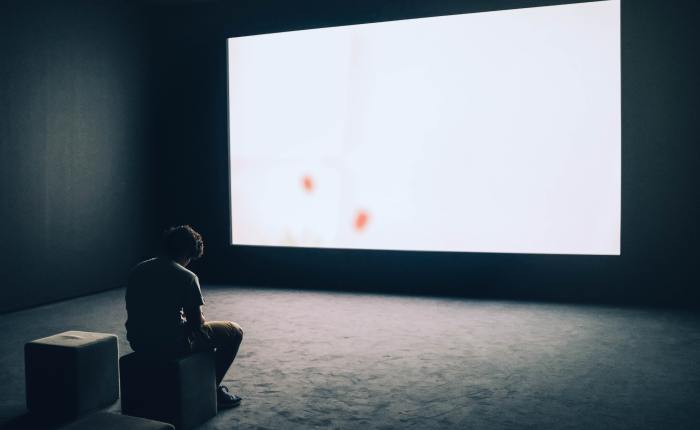
So what happened?  What changed that the average evening for the average American now looks like a face in front of a screen rather than a face to face? Social anthropologists could probably explain what happened with studies and stats but I think the main thing that happened was the screen itself. It started perhaps with the television but has evolved so that our innate narcissistic tendencies are now fed wall to wall entertainment. Who needs community when there is Netflix?  

A few things should be noted in this. First, we accepted this reality without a moment’s hesitation or reflection on what it might actually do to us. We were like the proverbial frog in the pot of water set to boil. We swallowed the television whole hog and then the Internet in our homes and then in our pockets and on our wrists. We occasionally lament the content – violence in the video games and porn on the smartphone in the average teen’s pocket – but we do very little about it. Second, the content is not nearly as destructive as the medium itself.  Neil Postman, in his book Amusing Ourselves to Death, warned us before the Internet had even hit the screen. 

No one listened. 

Every medium used to communicate information, every system used to accomplish a desired goal has both intended and unintended consequences. They create behaviors. They shape our lives in ways we rarely expect. By the time we recognize the problems, it’s often too late.

And so television brought entertainment into our living rooms.  It brought the news of the world into our homes. We could know about almost any topic with television and even more with the advent of the cable networks and virtually everything with Google. But while we are solving problems in our world faster than ever (a positive outcome) we are also creating problems at an alarming rate and we are increasingly, all alone.  We have traded the birthright of community for a bowl of entertainment.  We get to see every move (or Tweet) our politicians make and yet it’s all sound bites and entertainment.  Our compassion for the downtrodden refugees of war is replaced with outrage over a politician’s missteps which is forgotten with a football player’s improprieties.  And this all happens in the course of any given day.  The next day we start all over.

Television and now the Internet has changed the way we interact with our world.  We can argue over the scale of the benefits and problems that have come with that, but we must all agree that it has changed our society.  The way we communicate, the way we interact, the way we learn and grow and disagree have all been changed.  The medium, not the content, is responsible for that change.  

The system is creating us anew.

I write all of this, not to merely warn against the unintended consequences of television and the Internet. You can read Postman for that and I’d encourage you to do so soon. I certainly need to reread it for I too often find myself endlessly scrolling Facebook rather than gathering with friends and family.

I also ask these questions because if it is true that the mediums of communication and the systems of life we have adapted shape the ways in which we interact, learn, and live, then we would do well to pause and reflect on all the ways this plays into the forming of our lives in other areas.

What about the systems we’ve adopted for education at schools, and religious formation at churches has created unintended consequences?  Why do we produce so few lifelong learners through our educational systems?  Why do so many churches create consumer driven Christians?  What about the mediums and systems we’ve adapted for school and church lead to these outcomes?

These are questions that I hope our next generations will do better at reflecting on than my generation has? 

Our future probably depends on it.

Photo Credit

The May 12th Derecho

The May 12th Derecho

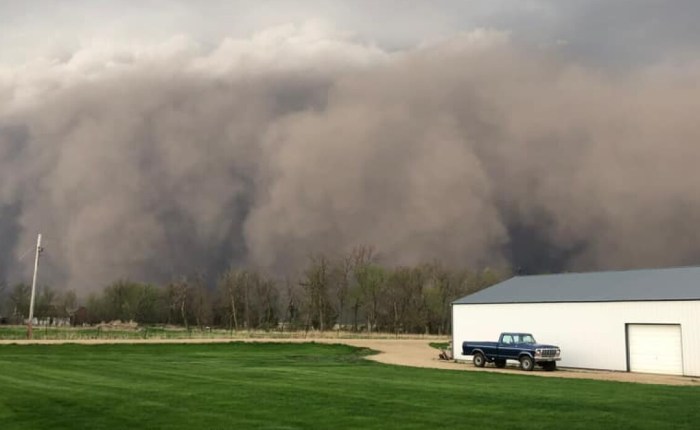
I was at work in my shoffice and, situated as it is on the north side of our home, I did not notice the impending storm building and rolling in from the South. It was my wife’s frantic knocking that drew me out. As I wandered into the front yard, my annoyance by the intrusion into the work I was doing disappeared in the shadow of the roiling cloud of dirt and debris that seemed a tidal wave of power about to slam into our midst. I suppose we all experienced the storm in our own unique ways – one friend was trapped in a tractor whose windows were shattered. I read the story in our local paper of a seven year old girl, stopped in their car on the side of highway 44, who was sucked out of the door she had accidentally opened, blown across the highway and into a tree – it was a miracle that she survived. Our kids were at track practice and just as the storm was about to hit and our daughter came sprinting down the road from school. Her brother had not yet returned from his 40 minute run when she’d left and so we headed to our basement in the helpless state of wondering if he was hiding in some ditch in the country or if he’d found his way into the basement of a stranger along his route. We beat back the worst case scenarios swirling in our minds with our prayers for his safety. In those desperate moments of waiting we called out to God and when the phone rang and he informed us he’d sprinted the last four blocks to the school as someones rolling trash can flew past him in the air, the great knot of fear we’d been bound in was released.

The derecho of May 12th, 2022 is not a storm we will soon forget. The reminders of its power lie in the ruins of grain bins littering the state and in the blue plastic tarped roofs and the 50 foot pine tree lying on its side in our neighbors back yard. We are thankful it was not worse – our prayers for safety are transformed into prayers of gratitude.

Here is a time lapse video of the storm rolling in.

image credit

Waiting in the Terminal

Waiting in the Terminal

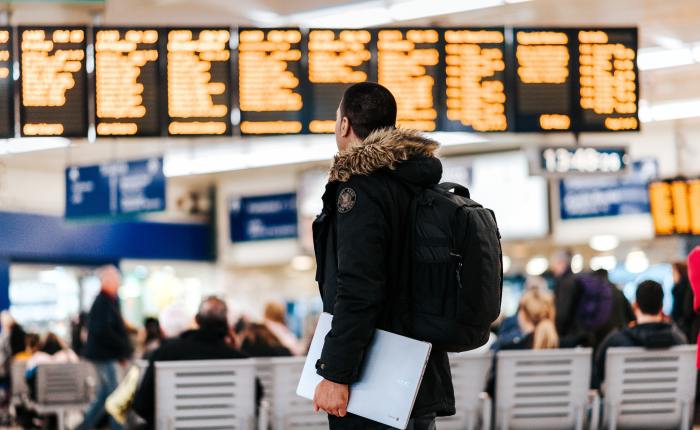
For the second time in three weeks, my late night flight home has been delayed. I’m not sure if it’s me or Delta, but tonight’s already late flight – 10:35 pm – has been delayed until 12:45 am. I’ll pull into the house around 3:00 am if I’m lucky.

G.K. Chesterton said that, “An inconvenience is just an adventure wrongly considered. An adventure is just an inconvenience rightly considered.” I’m looking for the adventure in the evening. They’re giving away free snacks and water and I’ve grazed liberally. I’ve cued up Eric Clapton’s “After Midnight” to play as I walk down the jetway to the plane.

Jesus encourages us to not worry about tomorrow, that tomorrow has enough worries for itself. It seems the older I get and the more life experience I gain and the more I learn to live with a radical trust that God has my best interest in mind in all things – even delays at the airport – the easier it becomes to live in tune with Jesus’ teaching on worry.

It will all work out. God is for me. He’s for us.

Wandering Through the Sea of Fog

Wandering Through the Sea of Fog

The wind howls through the trees outside our living room window and the thermometer has dropped to negative two degrees and it’s not done yet. It is winter proper here in South Dakota and we’re experiencing one of our first true snow storms of a fairly mild winter. We watched a movie tonight as a family and now, the girls write letters as I type out a few thoughts bouncing around in my head.

I wonder sometimes what it must have been like to endure winter before electricity, before all the modern conveniences that tempt us to disregard the rhythms of nature. When the sun went down early, the work day came to a close as families headed inside to be together – there were no other options. It was a forced pause that lasted months. Nature forced sabbath rest upon us whether we wanted it or not. Now we rush through winter like the rest of the year, wall to wall busyness with hardly a moment to rest. It seems we have perhaps allowed something important, essential even, to be stolen and we’ve not put up much of a fight. Tonight at least, I’m enjoying the pause.

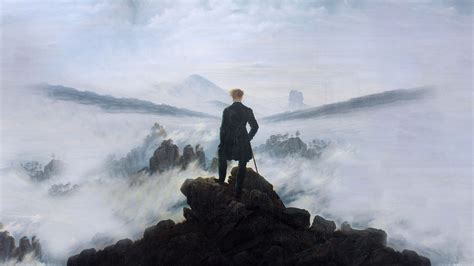
Casper David Friedrich’s painting, “The Wanderer Above a Sea of Fog” has captured my attention these last few months. I first saw it in book I finished in December, The Landscape of History: How Historians Map the Past. The book was interesting and quite good, but the painting seemed to capture something of how I’ve felt in this particular stage of my life. I’m 48 and I’m in between. My oldest is in his last year of high school. and preparing to launch. I’m at the age where we begin transitioning on from those we love – those both older and younger are moving into new homes – some to heaven where life is as full and good as it can possibly be, and some to new beginnings, to new lives and new dreams and new adventures. It is a time that is filled with joy and sadness, excitement and fear. The mountain climber is both the center of the painting at the top of the world and also utterly insignificant amidst the landscape rolling away in every direction as far as the eye can see. Some aspects of the landscape are clear and distinct; others shrouded in fog. Is it analogous to life? Filled with hope and yet shrouded in mystery. Important and insignificant. What will the next years hold? Where will we be three years from now when both kids have moved out of the house? For them and for us there is the potential and excitement of the next thing and yet that thing is floating just beneath the fog.

How will we live into this unknown future?

In Jonathan Roger’s book, The Bark of the Bog Owl, a mythological retelling of the story of King David, the main character Aiden Errolson, who has just been anointed as the future wilderking, asks the wisened old prophet Bayard the Truthspeaker, “What if I am destined to be the wilderking? How should I live?

The same way you should live your life if you weren’t the wilderking. Live the life that unfolds before you. Love goodness more than you fear evil.

What should we do when the fog comes up around us shrouding the way forward in mystery?

Live the life that unfolds before us. Love life more than we fear evil.