Friday Poems: Out My Window

I wrote this poem as an English teacher at Freeman Academy.  The freshman that year are now juniors in college.

—–

Out my window, rain beats the cottonwood tree from above.

It bows – but it always bows now – and so while it looks as if it is taking a beating,

it is rather enduring as it has for years upon end.

Perhaps when it was young, like my students,

it bowed under the weight of rain, the strength of wind.

Perhaps the year it was planted,

a grandmother of one of my freshmen was a freshmen herself,

was supple and springing and of course,

weak.

And perhaps that grandmother, now bent and bowing is beat on by the rain of life,

but unaffected, strong and resolute.

Perhaps my freshman can watch her and learn to be strong and resolute themselves.

—-

September  2006

Book Review: The Lazarus Life

A good story offers a window to peer through in order to see something we could never come up with our own.  A great story ignites something within us that can’t be ignored and will never be forgotten.  A good story informs us.  A great story changes us.

Author, pastor and spiritual director  Stephen Smith outlines the journey of spiritual transformation through the story of Lazarus in his devotional book, The Lazarus Life.  Using Lazarus as his plumb line, Smith draws parallels to our own life, a life he believes should be marked by transformation.

Smith says, “The life offered by Jesus, taught to us by Paul, and experienced by the early church, is a life of transformation.  It is deep-down change at the DNA level of our souls.  It is a life that comes only from Jesus, who identifies Himself as the only life we need.

Lazarus of course is the brother of Mary and Martha, friends of Jesus who hosted he and his disciples at their home, who listened to his teachings and watched his miraculous acts of healing and power.

In the story Lazarus falls ill, so ill that Mary and Martha believe the only way to save him is to send for Jesus, who they know from personal experience as a healer.  As their friend, surely he will come.  But Jesus doesn’t come right away.  He lingers on where he is at and Lazarus dies.

Days later and after Lazarus has been in the grave four days, Jesus finally comes.  Reading the story from our perch in history, we know what comes next.

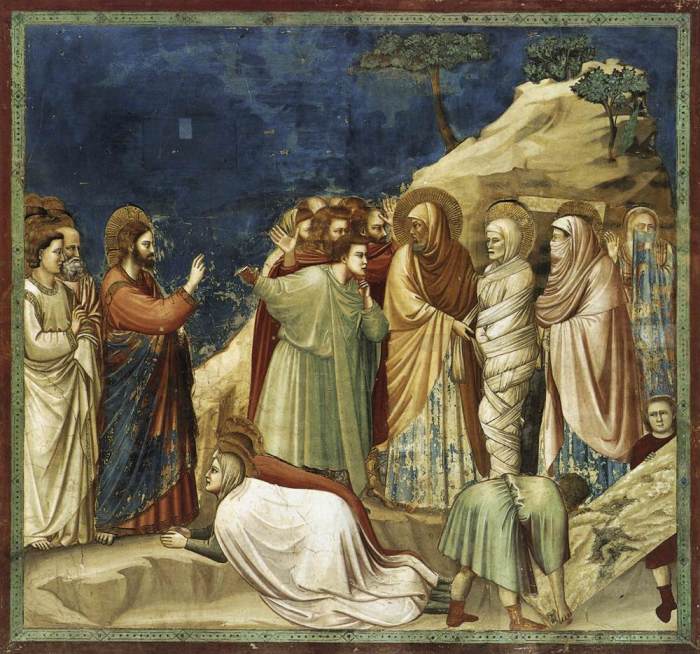
Jesus, once more deeply moved, came to the tomb. It was a cave with a stone laid across the entrance.  “Take away the stone,” he said.

“But, Lord,” said Martha, the sister of the dead man, “by this time there is a bad odor, for he has been there four days.”

Then Jesus said, “Did I not tell you that if you believe, you will see the glory of God?”

So they took away the stone. Then Jesus looked up and said, “Father, I thank you that you have heard me.  I knew that you always hear me, but I said this for the benefit of the people standing here, that they may believe that you sent me.”

When he had said this, Jesus called in a loud voice, “Lazarus, come out!”  The dead man came out, his hands and feet wrapped with strips of linen, and a cloth around his face.

Jesus said to them, “Take off the grave clothes and let him go.”

Through Lazarus’ journey from death to life, Smith introduces the reader to the idea of spiritual transformation.  By leading us into the drama of this particular Biblical narrative, The Lazarus Life acts as a guide that will help readers like me to understand what spiritual transformation might look like and what we might need to do in order to enter into it.

Smith breaks Lazarus’ story up into different stages of the journey.  These of course are not hard and fast stages, but rather a way to talk about the sometimes messy work of transformation.  It made it possible for me to read a chapter a day and to pull from each chapter helpful ideas and insights to think about and meditate on.

It also allowed me to sink into the Lazarus story, to slow down and watch the plot unfold and put myself in the place of the on lookers, of Mary and Martha and of Lazarus.

This proved incredibly helpful as I have always read the story knowing the ending.  This robs the story of much of it’s power.

  • Mary and Martha must have faced severe disillusionment, discouragement and fear.
  • Lazarus died.  His body had begun to rot and as he stepped out of the grave, the stench of death must of stepped out with him.
  • After Lazarus had been raised, the Jews began plotting his death.

Transformation isn’t always pretty and it doesn’t always lead to a life of ease and tranquility.  Smith reminds us that “authentic transformation is always messier than we expect it to be.”

Transformation is rarely easy, but in the end, it is always good and it is always best for us and leads to the life of abundance that Jesus promises.  Stephen Smith makes that fact abundantly clear and offers a helpful guide on the journey in The Lazarus Life.

A Few Quotes From The Book

Waiting on Jesus is not a passive act.  Waiting on Jesus is soul work.  As we wait, we relinquish control, surrender our wills, give up our false hopes, and realize that if anything is going to happen at all, it will have to be  God’s doing.

Here’s a simple truth: God can use any circumstance, any tragedy, any wronged heart as an instrument for our transformation.  No tomb is dark enough, no situation hard enough, no life broken enough that God cannot use it as fodder for the fire of transformation.

The rhythm of Jesus’ life is the rhythm of a transformed life:  a time of activity followed by a time of reflection.  Both are vitally needed.

We get one life but many opportunities in this one life to get it right.  To live a transformed life is a life-long privilege.

Hey, those links to the book above are affiliate links.  They don’t change the price for you if you’d like to pick up a copy, but I’ll make about 7% from Amazon.  If you are in the Freeman, South Dakota area of course you can borrow my copy.  Buy The Lazarus Life.

image

The Fogs of Life

My morning respite.

Sunday morning I awoke to the train rolling through the small town of Dolton just a half mile south of the farm with persistent warning blasts from its horn.  It was 4: 30 am and I drifted out of a dream and into the living room to peer into the darkness in search of understanding.  The engineer kept blasting the horn, again and again as if the cows had gotten out and wandered onto the tracks.  But it was not cows he was worried about, it was fog, a thick, wet fog that clung to the earth and shrouded vision in its grasp.

A few hours later and after a bit more sleep, I worked my way into my morning routine.

  • Start the coffee to brewing.
  • Drink a class of water.
  • Make a half of a peanut butter and jelly sandwich for first breakfast.
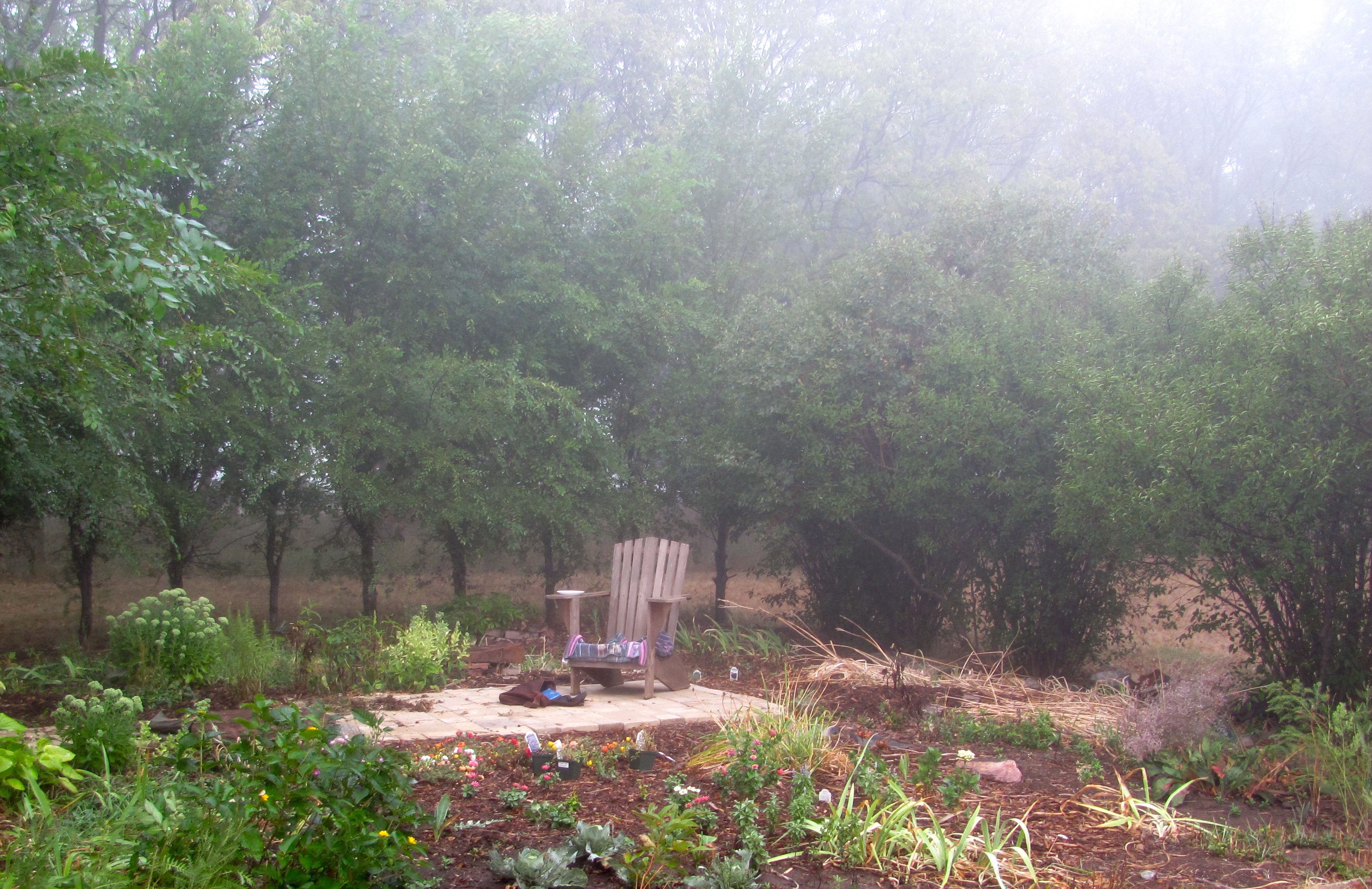
  • Grab my satchel with my books and journal and head to the Adirondack chair in the flower garden.

As I stumbled out the back door, coffee in hand, I was met by the soaking blanket of fog that had earlier slowed the train.  I was glad I’d thought to bring a towel for the chair was soaked with beads of fog formed moisture.

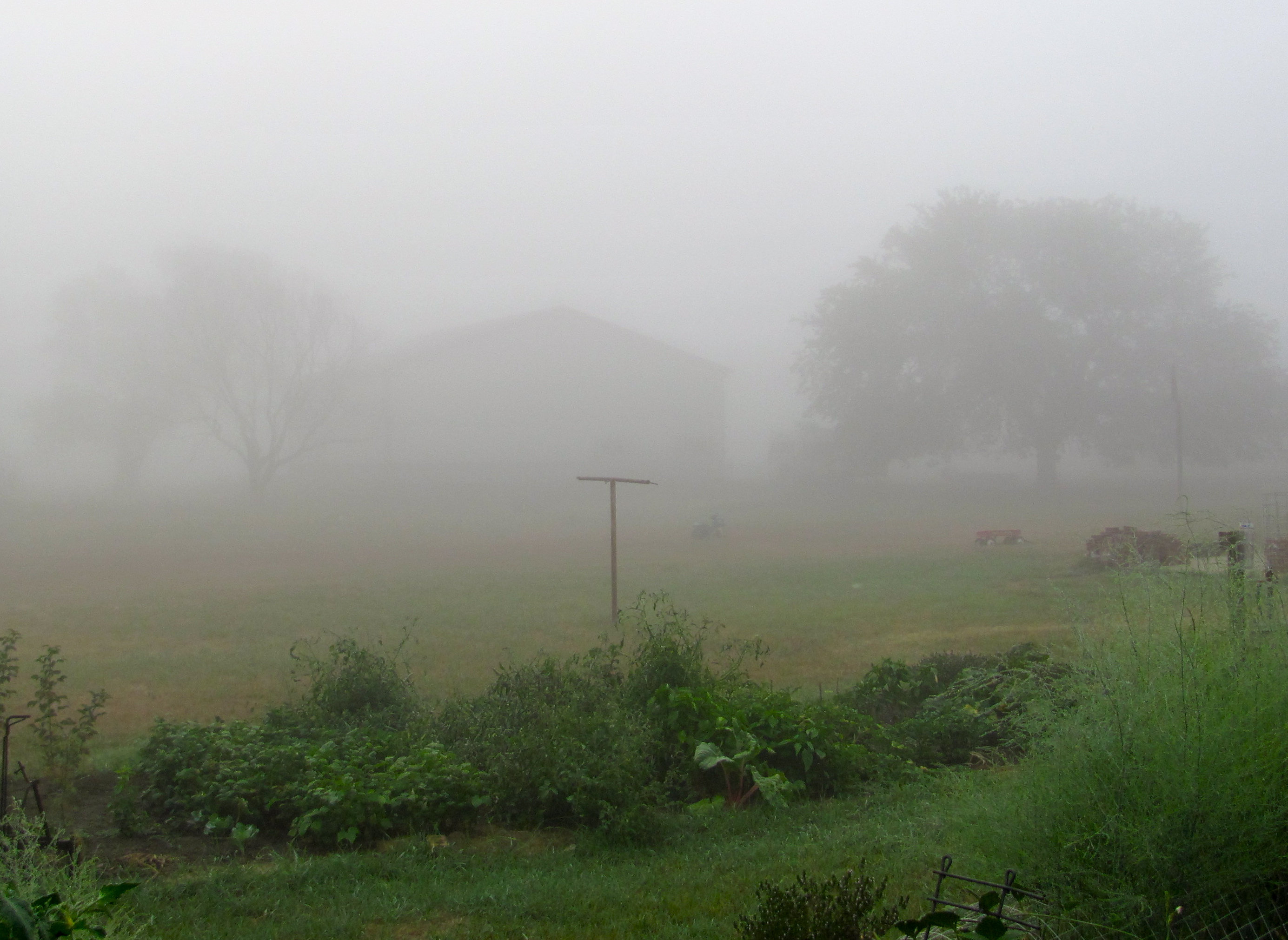
I settled into the morning, pulled my book and journal from my bag and set back to take in the view with a sip of hot coffee.  I stared into the cloud of white around me, discerning naught but the outline of the machine shed on the far side of the yard.  It sat a ghostly apparition in the distance beyond which nothing could be seen.

The land was hung in white darkness.

Life has seemed shrouded in fog as of late.  Many decisions yet to be made remain unclear, remain unanswered.  I see shapes of what the future might hold, but nothing is clear.  Our future is a shadowy outline yet to be defined completely.

The farm wrapped in fog.

The fog of life leaves me at times worrying if I’ll find my way.  I can move forward, one gingerly step at a time, always checking to see if I’ll recognize landmarks that will lead me further, or I can wait.  I can sit and wait and be still until the fog lifts because, fog always lifts.

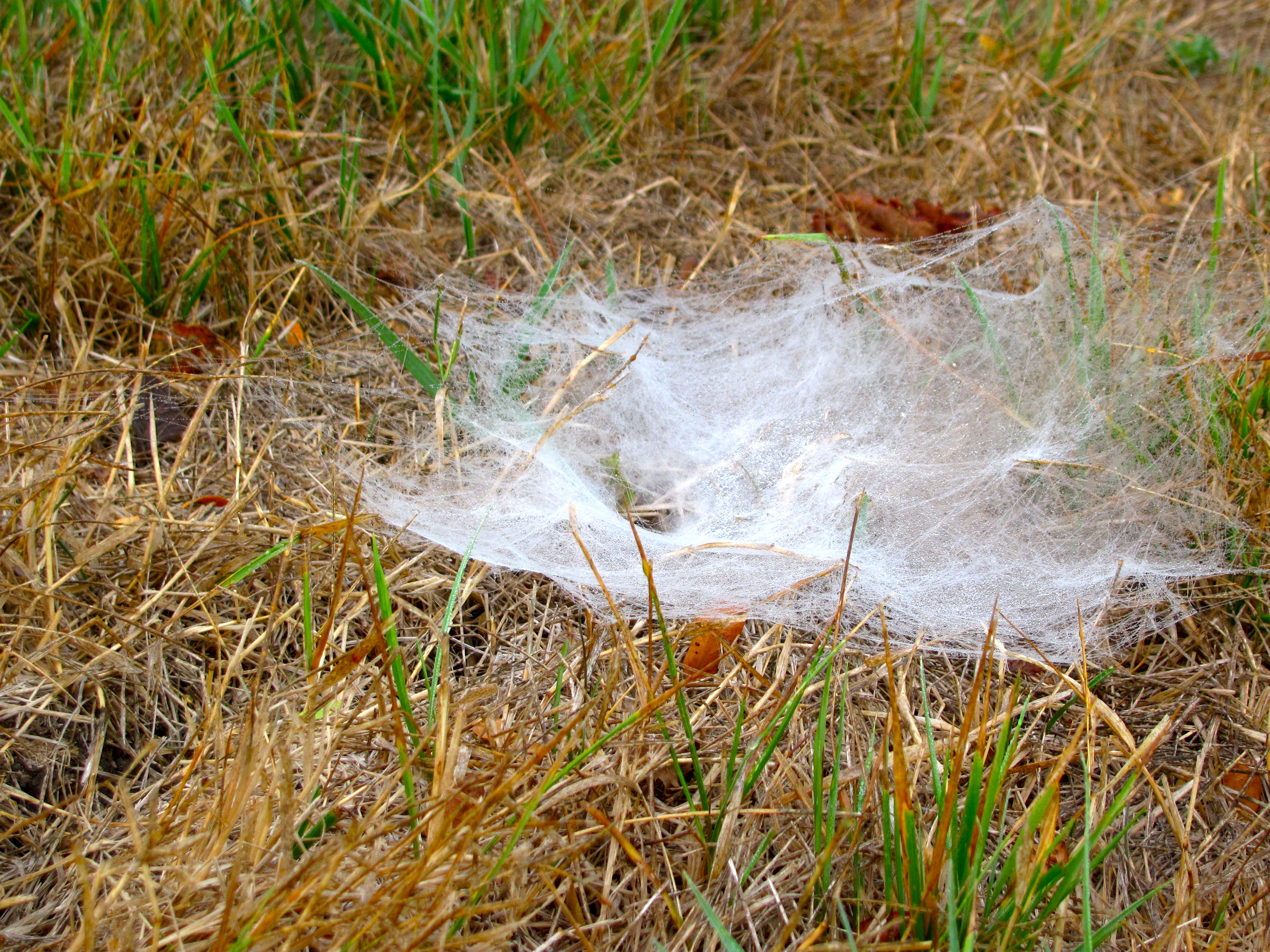
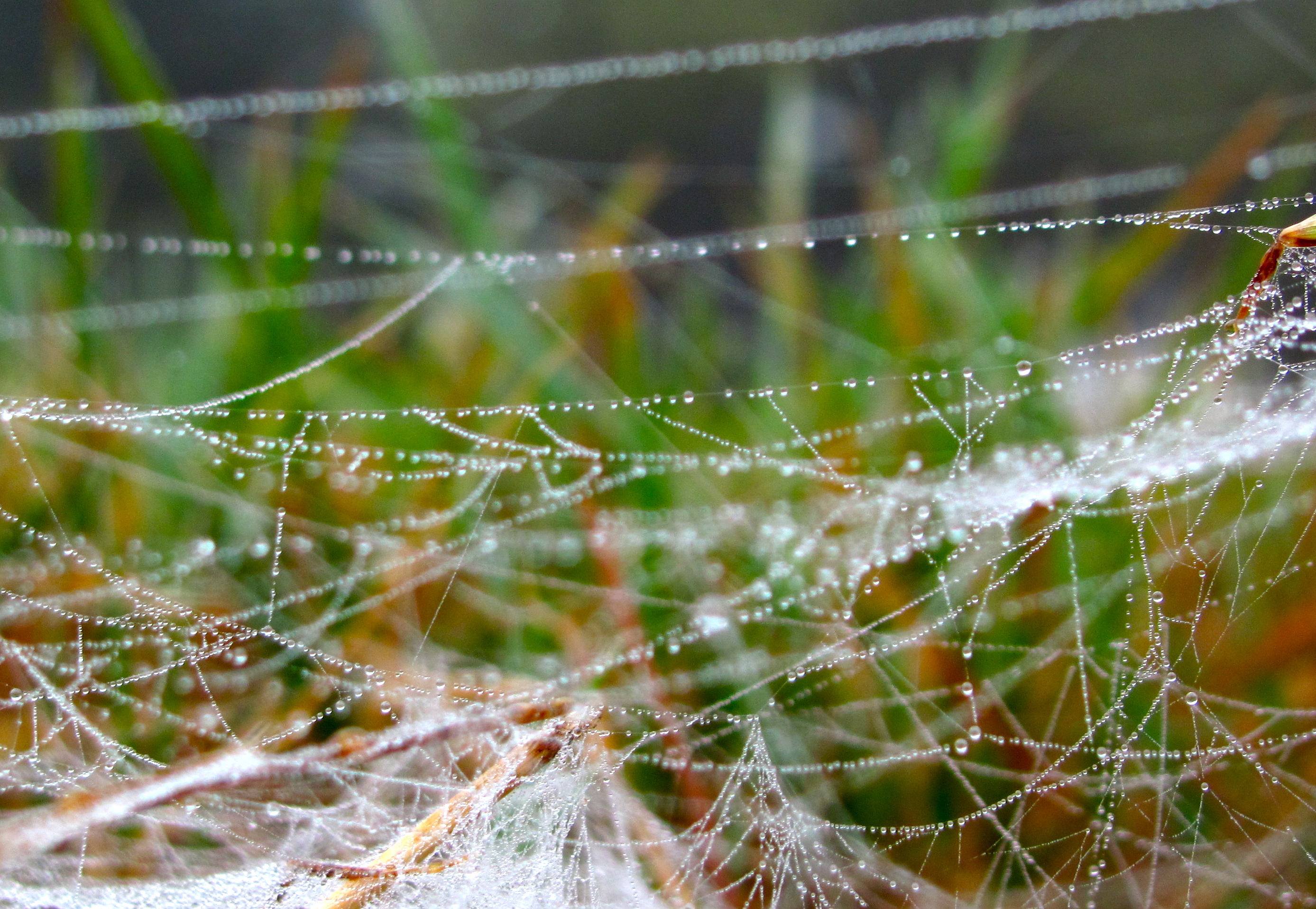
One gift of the waiting is the seeing of new things, things unseen when moving quickly through life.  The yard Sunday morning was pockmarked with white spider webs coated in a sheen of fog induced dew.  They were there the day before and perhaps I’d crushed more than a few traipsing back and forth across the burned up lawn, but I’d never noticed them.  The fog, both by stopping me in my tracks and by accentuating their presence, unveiled them.

One of many such spider webs.

How About You?

Sometimes in the fogs of life we must set out as best we can and work our way toward an ethereal destination that only becomes clear as we move forward.  At other times, we need only to rest in the cloak of darkness, looking and listening for the beauty that can only be found in the waiting.  And sometimes it seems we do a bit of both.

That is where I find myself now.

How about you?  What has life surprised you with when you’ve set out into the fog or when you have waited for the fog to lift?

Book Review: The Man Who Quit Money

Money is the root of all evil – an oft quoted maxim that no one I know actually believes.  Belief would lead to action, lead toward an avoidance of the cause of evil, a shunning at least, and if you were an evangelical par chance, maybe even a well organized boycott.

And yet no one I know personally or whom I’ve read about in story has actually quit money.

No one until today.

In The Man Who Quit Money, author Mark Sundeen tells the subversive, interesting and unsettling story of Daniel Suelo.

In the autumn of 2000, Daniel Suelo deposited his worldly wealth – all thirty dollars of it – in a phone booth.  He has lived without money ever since.  And he has never felt so free – or at peace.

So begins the masterfully written story of Daniel Suelo.  Sundeen mixes personal interviews, philosophical extrapolations of the money systems of our world, spiritual journeys, analogies and personal reflection in the telling of Suelo’s twelve years lived without earning even one dime.

While Daniel Suelo’s life is one that few will desire to emulate – he lives in a well stocked cave, eats food found in dumpsters or found in the wild and has no plan for retirement – there is a certain freedom in his bohemian existence that is to be admired.

Living outside of Moab, Utah, he has a rich social life, eats well and maintains a blog from the public library.  Daniel is not one to just pull away from society to live a hermit life of solitude.  Rather, he has decided that living in what he perceives as a broken system is no longer an option.  And so while others work to reform the system, he has decided to live without it.

Suelo’s philosophy on money is highly nuanced, influenced from both the right and the left and in that sense both Tea Party and Occupy Wall Street folks can find kinship in his presence.  His influences include Abbie Hofman, John Birch Society Member, C. Edward Griffin and political reporter for The Nation, William Greider.

He is also influenced by eastern Buddhism, Hinduism, and his own roots, Christianity and the teachings of Jesus.  The son of Plymouth Brethren parents, Suelo abandoned much of his Christian faith on life’s journey.  He embraced an alternative lifestyle, wrote his own theology and wandered the globe in search of enlightenment.

This spiritual journey was of great interest to me as it chronicled this man’s abandonment of the faith his parents professed.  As someone who desires to encourage young men and women to grow in their own faith in Christ, Daniel Suelo’s journey is one from which many lessons can be observed.

His thirst for truth was meted out in the beginning on the Boulder University campus where the Campus Crusade and Inter Varsity groups he had  joined were ill prepared for questions he asked and the spiritual dilemmas he faced.  For him, Evangelicalism was not a safe place to bring his doubts and questions.

Issues of money and greed were especially troubling to him as he observed Christians mixing the American Dream and the faith they professed into a strange brew that little resembled the Jesus he read about in the Bible.

Do not worry about your life, what you will eat or drink; or about your body, what you will wear.  Is not life more important than food, and the body more important than clothes?  Look at the birds of the air;  they do not sow or reap or store away in the barns, and yet your heavenly Father feeds them . . . who of you by worrying can add a single hour to your life?

-Jesus

It was Jesus’ words in the Sermon on the Mount however that eventually convinced him that he actually could give up money.  He’d been hanging on to his last fifty dollars in case of an emergency, something big.  When he left those last thirty dollars in a phone booth in Pennsylvania though, he stepped permanently out of the money system that rules the world and into the life of dependence;  dependence on the goodness of others and for Suelo, of fate.

The story of Daniel Suelo is an interesting one.  As someone who has a subversive streak myself, I enjoyed the questions that this book posed, and left it with new questions of my own.  Sundeen’s writing is well woven, inviting and at 259 pages, can be tackled in a week of reading.

If you are interested in learning a bit more, be sure and watch the video above from the BBC.

I found this book at our great small town library.  You can also order it from Amazon HERE. [affiliate link]

Lemons to Lemon-ade

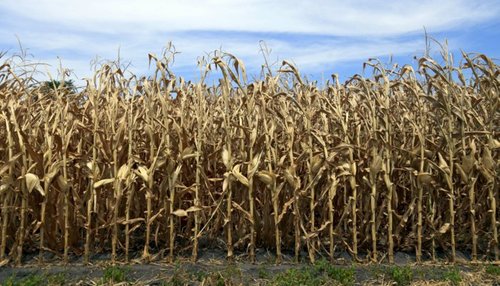
If you haven’t heard already, much of the Midwest is in a severe drought.  Two summers ago, our county in southeast South Dakota received nearly 30 inches of rain in the months of June, July and August.  This year, we’ve felt the cooling touch of just under two inches.

2010 was abnormal in the greatest sense of the word.  Nothing like that has ever happened before and no one really expects anything quite like that to happen again.  But droughts are part and parcel for the course of a South Dakota farmer’s life.

The last big drought was in the 80’s.  Farm Aid took off then though many lost their farms.  I am no farmer, nor did I grow up on a farm.  Raised in rural Kansas though, many of my friends were farm kids and now I’ve married into a farm family and so I’ve grown to understand at least a bit of the life of a farmer.

One thing I have learned for sure is that farmers, for the most part, are long on faith.  They plant a crop with no real guarantee that anything will come up, or if it does, whether or not it will produce a crop.

This year is a the type that puts that faith to the test.  The corn came up but then the skies locked up, withholding the rain needed to fill out the cobs, which now resemble mutated dwarves of the corn they should be.  There will be no bumper crop this year.

And so with the bald news of a ruined crop, the farmers in the area do what farmers do best.  They move forward, make some hard choices and begin to cut their corn into silage.

Silage is ground up corn – the whole plant – which is covered and left to ferment and which makes a nutritious feed for cattle.   Cattle prices are up, there’s not much grass left in the pastures and the price of corn is going up too.  So silage makes a lot of sense.

When bad things happen those who can make the most of it and move forward will often come out ahead.  

We can’t make it rain, so there is not much else to do.  We just got to take the lemons life hands out and do our best to make lemon-ade

Life’s like that.  

Fellowship

One of my larger concerns in returning to South Dakota was and has continued to be finding fellowship – for me and for my family.

In Turkey we had good friends – both Turks and other expats – and were continually amazed by the quality of those people, the depth of their faith and the generosity of spirit that we received from the time and again.

So when we visited a small home church last Thursday night in Sioux Falls, we didn’t know what to expect.  Some friends of ours were visiting and so we decided to tag along.

It started well when we found out that they share a meal together before meeting each week.  Food is often a prime ingredient to fellowship and as a bonus there was an amazing artichoke dish of which I was fortunate enough to be able to indulge in three helpings.

The service was great, but we were blown away with love when they began to ask about our time in Turkey and how we were doing,  how they could help us transition back and if they could pray for us.

And they listened – really listened.  

Afterward I was reminded of a Bonhoeffer quote:

The first service one owes to others in the fellowship consists in listening to them. Just as love of God begins in listening to His Word, so the beginning of love for the brethren is learning to listen to them. It is God’s love for us that He not only gives us His Word but lends us His ear. So it is His work that we do for our brother when we learn to listen to him.

Listening – really listening to others is a powerful action.  We felt how important it was as we shared bits of our story, of our desires for the future and as they responded in generous love and prayer.

I was challenged to do a better job of listening myself.

Where to Live

Tomorrow our lives will return to normal – sort of.  What normal is for us is yet an elusive and somewhat surreal idea that we have not figured out.  But tomorrow we will awake alone.  Just us. Just our nuclear family.

One part of our journey toward the new normal will be to find our own place to call home.  We are staying with our folks for now and their generosity has been great and we all get along really well.  We are blessed that way.

But, we are beginning to feel the need for our own place.  More space is not what we are after, but rather a small corner to call our own.

The picture above would be a close rendition of my dream home.

  • Strawbale
  • Off Grid
  • Sustainably Built

And yet our situation leaves us a fair bit off of the road toward that dream.  I am not even sure it is a dream I should work toward – there are so many other variables involved.

For now, we will most likely find something temporary.  And if it works out, I’ll practice a bit on a strawbale home office of my own.

Hopefully.

image

Rain

The landscape browns toward crisp, dusty death and has been doing so for three months past.  June, July and August have held back their summer rains – a bit over one inch to be exact.

The dugout is dry.

The trees are greeting autumn in leafy shades of early brown.

The corn is not.

The country roads are ankle deep in dust.

Draught is upon the land, gripping life and squeezing green to brown.

But last night the earth breathed deep in relief as cool rains fell through the early morning dark, as life came again.

image