
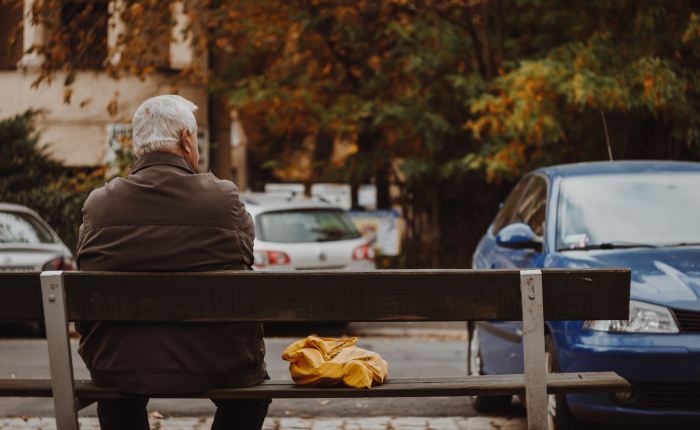
The old man walked into Cost Cutters behind me and as I did, checked in to get a haircut and then found his way to one of the gray, plastic seats along the wall. We made eye contact, shared a nod of greeting. I opened up a book I was reading on my phone. He sat, taking in the surroundings, watching for clues to the room, sitting in the silence of his own thoughts. He slowly unzipped the blue jacket he was wearing and shifted to get comfortable. The snipping of scissors and the happy chatter of hairdressers and clients filled in the cracks of our shared presence. I had but to wait for my turn, for one of the ladies to come and call out, “Aaron.” I’d stand then and head back for my turn in the chair and the chatter.
But before my name could be called another old man appeared just ahead of the lady who had just finished cutting his hair. She walked behind the counter, he in front and, and as he struggled to pull his wallet from a back pocket that had moved beyond the reach of rusty shoulder joints, asked with a wrinkled, mischievous grin, “Do I get the senior discount with that?”
I and the other man shared a chuckle at the interaction as the lady grinned back, “I’m afraid not today.”
The man in the gray chair, feeling a sense of camaraderie with a fellow gray hair joined in, “We’re not old enough for a discount yet, are we?” I wondered if these two knew one another, old friends who’d stumbled into one another at the barbershop. But the man at the counter turned, slowly shuffling one foot and then the next below a body that no longer twisted with youth. He nodded a greeting to this stranger and said, “Well, I don’t know. How old are you?”
The man four chairs down from me replied with a proud, knowing smile, “Seventy seven.”
The man at the counter, now with wallet in hand, looked down as if doing math in his head. “I’ll be seventy seven in four months.” he finally replied, handing a twenty to the lady at the register.
The man who’d asked adjusted his John Deere baseball hat and then a new thought found its way into another question, “Do you remember when we could get a haircut for a dollar?” It was an effort toward commiseration over living lives through shared decades. The other man stood, still and silent now, wallet open in his left hand waiting to receive the change clutched in his right. The smile had left his face. After a moment, he shoved the money into the wallet and struggled to get it back into his pocket. “I guess I don’t remember. My wife always cut my hair. I was just twenty one when we got married so I never really went to the barber.” His voice was a quiet tremble. “I lost her six years ago.”
The other man took his hat off then. His hair was thinning and he looked down into his lap. I thought he might say he was sorry for the other’s loss but looking up with sad eyes he replied, “I lost my wife last year.” The pain of shared loss hung in the air.
The man standing alone at the counter was first to speak. “I’m sorry for your loss.” He looked down then fumbling with a button at his jacket. He let out a quiet sigh. “It’s hard. It gets better but it’s still hard.” Looking back up he took a step closer. I watched and waited. The lady behind the counter waited and watched.
The man in the chair sat up a bit and pulled his hat back on, attempting to pull himself together, as if to meet grief with grief, as if to say thank you for understanding. “It’s been a lot harder than I would have imagined.” He looked up with questioning eyes. “What’s been the hardest thing for you?”
It was a question that seemed expected, as if this were a question every widower asks himself. In reply the other took another step forward. They were within a few feet of each other now, moving into one another’s stories, feeling one another’s pain. “I suppose one of the hardest things is the grocery store. I’ll be pushing my cart, all alone and I’ll come around a corner and there’ll be an old couple in front of me and they’ll be holding hands. They’ll be together and I’ll just be alone.”
The other nodded beneath his green hat and said again, “It’s hard.”
One man standing shoved his hands deep into his pockets. Another, sitting, sank back into his chair a little. They nodded at one another. The old man standing in the middle of the white tiled barbershop entry took one final step forward, reached out his hand. The old man sitting leaned forward, took the hand in his own and they held their grip for a long moment.
The man standing before the other released his grip saying, “Well, hang in there. Every once in a while you’ll notice it’s a little easier. It’ll still be hard a lot of days but some days will be easier.”
“Thank you” A sense of calm mixed with loss filled sad eyes. He had been heard and understood. With that the man turned and hobbled out the door. I watched him go. The hairdresser behind the counter watched him go. The grace of grief lingered broken only by the sound of my name being called, “Aaron.”




 Cobbled Together