
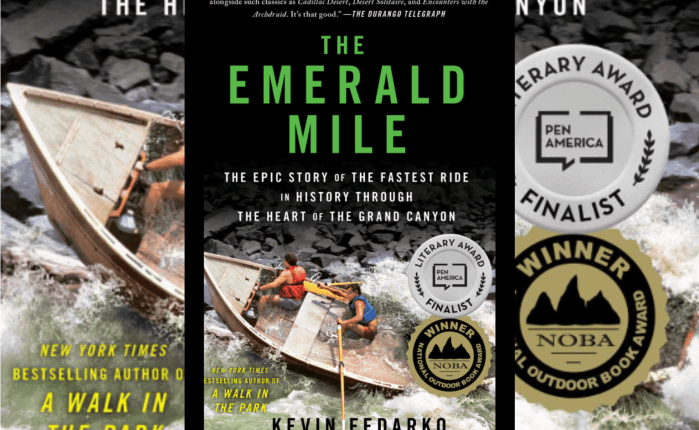
I spent four years in my early twenties working as a whitewater rafting guide in Colorado. Day after day, the Arkansas River shaped my life—its rapids demanding attention, humility, and trust. The river formed not just my muscles and reflexes, but my imagination. It taught lessons about risk, beauty, and the way water quietly but relentlessly carves its way through stone.
Because of that history, I was drawn almost immediately to The Emerald Mile by Kevin Fedarko.
Set in the heart of the Grand Canyon, the book centers on the Colorado River—the great river of American whitewater—cutting its way through one of the most awe-inspiring landscapes in God’s creation. At its core is the story of the fastest speed descent ever made through the Canyon, an audacious and almost mythic feat. That was the hook for me. But it is far from the whole story.
Fedarko uses that legendary run as a narrative spine, then skillfully weaves outward into something much richer. Through the currents of history, conservation, exploration, and human stubbornness, he tells the story not just of a river, but of the people who have been shaped by it—those who explored it, fought for it, studied it, and made their lives along its banks.
What makes The Emerald Mile remarkable is its balance. It is deeply researched without being academic, adventurous without being romanticized, and honest without being cynical. The men and women Fedarko profiles are rendered with candor and care, their virtues and flaws alike shaped by the power of the river they love. Nature is not merely a backdrop here; it is a force that presses in on every human decision.
In the end, this is not simply a book about rafting. It is a book about life—about the American spirit of exploration, about risk and restraint, about the tension between conquest and conservation. It is about how landscapes shape cultures and how rivers shape the people who dare to run them.
For anyone who has known a river, loved wild places, or wondered how adventure fits into a meaningful life, The Emerald Mile is a book worth reading. I recommend it wholeheartedly.
Get your copy of the Emerald Mile at your locally owned bookshop.
 Cobbled Together