Artisan Envelopes: Homemade and Completely Unique

IMG_2113

Over at my other blog, The Everyday Language Learner, I began a new venture to get people to send me postcards from where ever they live, telling me why they are readers of the EDLL blog.  It’s a way to build the community there, to share people’s stories and to get postcards.

I like postcards.  I like letters in general.  Getting a good, long letter from a friend is like a gift.  After finding an uninterrupted space of time, I’ll brew a cup of coffee and find a good seat from which to enjoy the letter.

I’ve never done that with an email.

My wife is an even bigger fan than I of all things letters.

For her it is an art form.  The letter is important but so is the paper it’s written on, the envelope it is sent in and the stamp.

I’ve been given the look more than once for putting a plain American Flag postage stamp on one of her hand-made envelopes.

For Consuelo, letter writing has become a bit of a cause – one worth fighting for.

As we have been looking for ways to cobble together an income over the last six months, I’ve encouraged her to think about finding the convergence of her passions, her creative giftings and the  economic realities that require income generation.

That is where I hope everyone can find themselves – making the money they need to live through the passions and skills that both bring the most joy and do the most good.

It is what I try to do over at EDLL.

And now Consuelo is ready to give it a try.

IMG_2105

Artisan Envelopes and Stationary

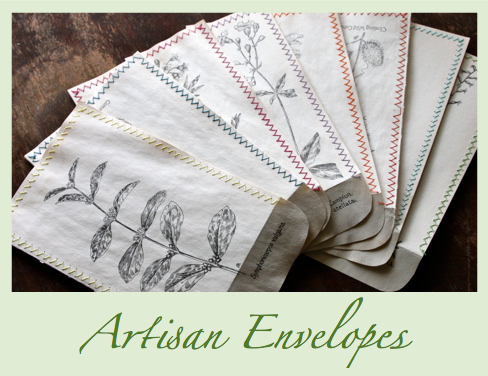
We would like to introduce a new series of  products – hand-made artisan envelopes and stationary.

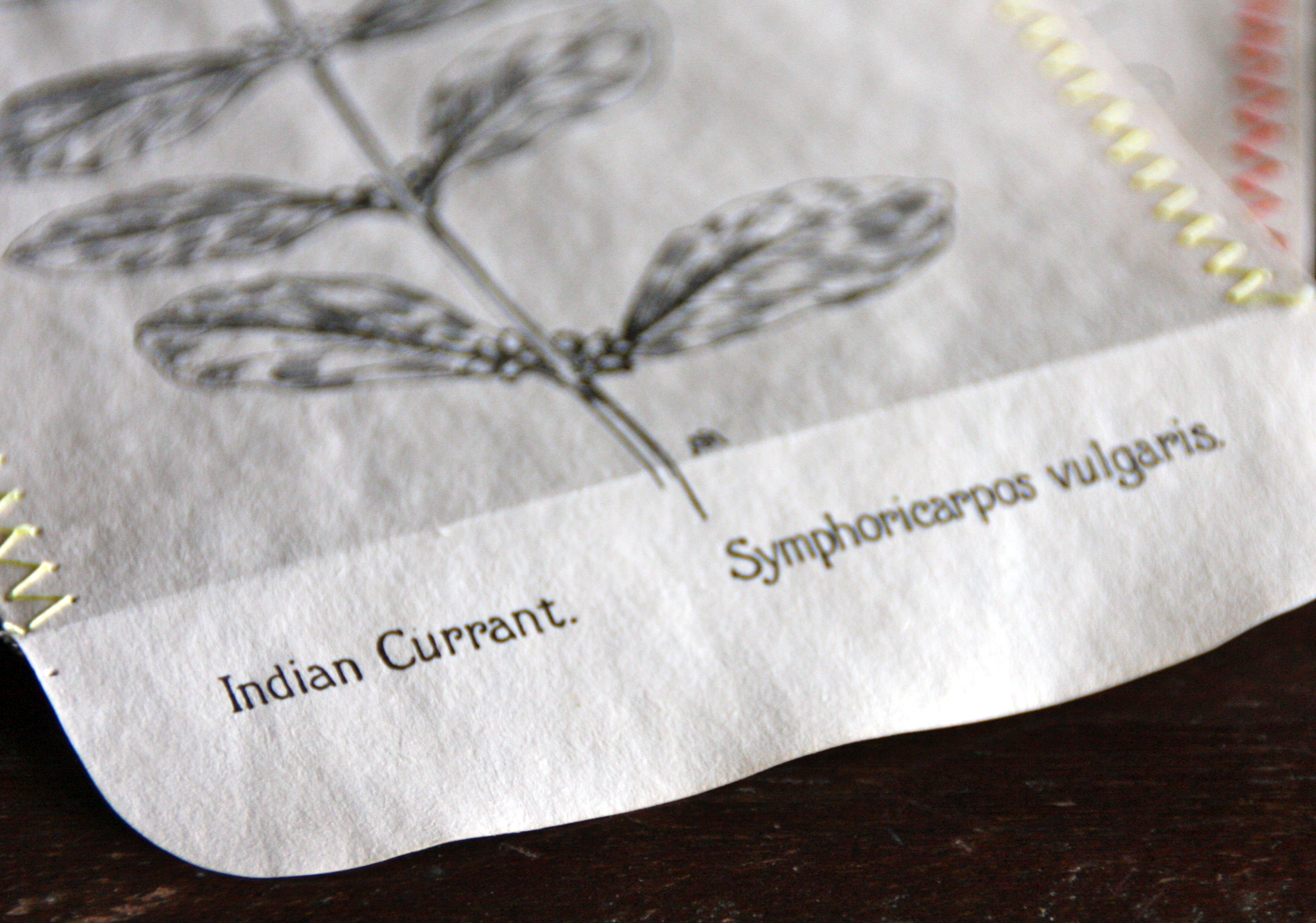
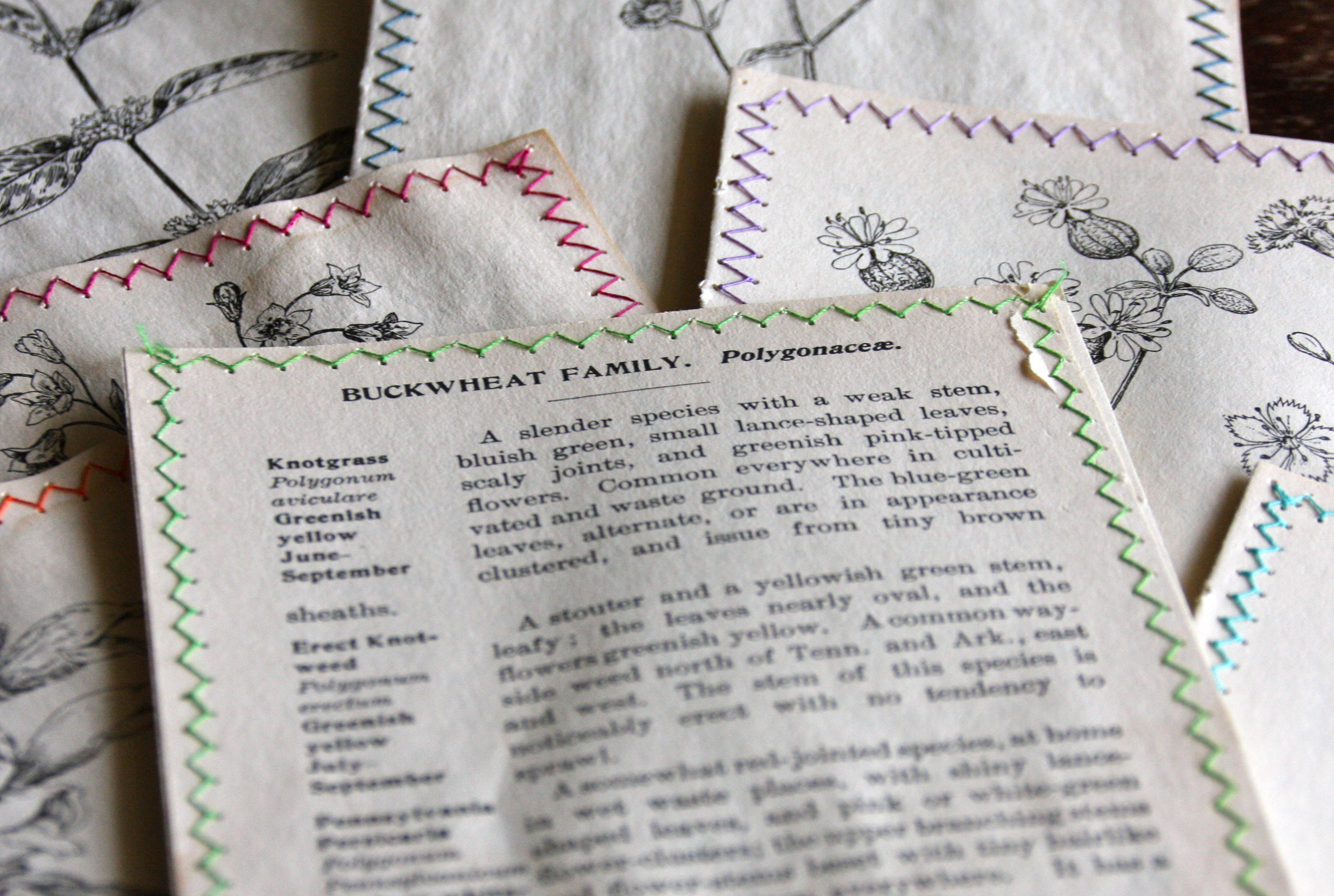
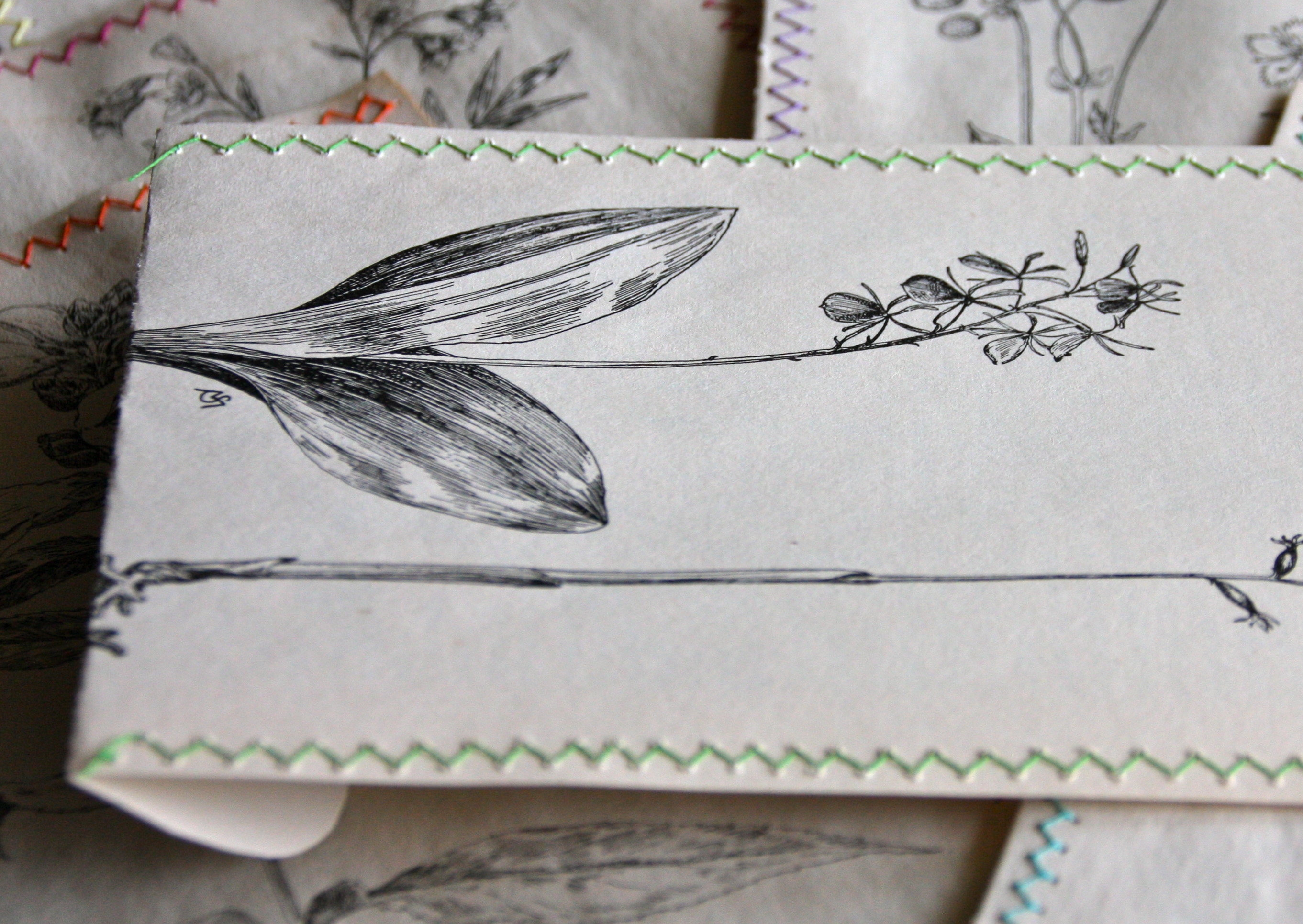
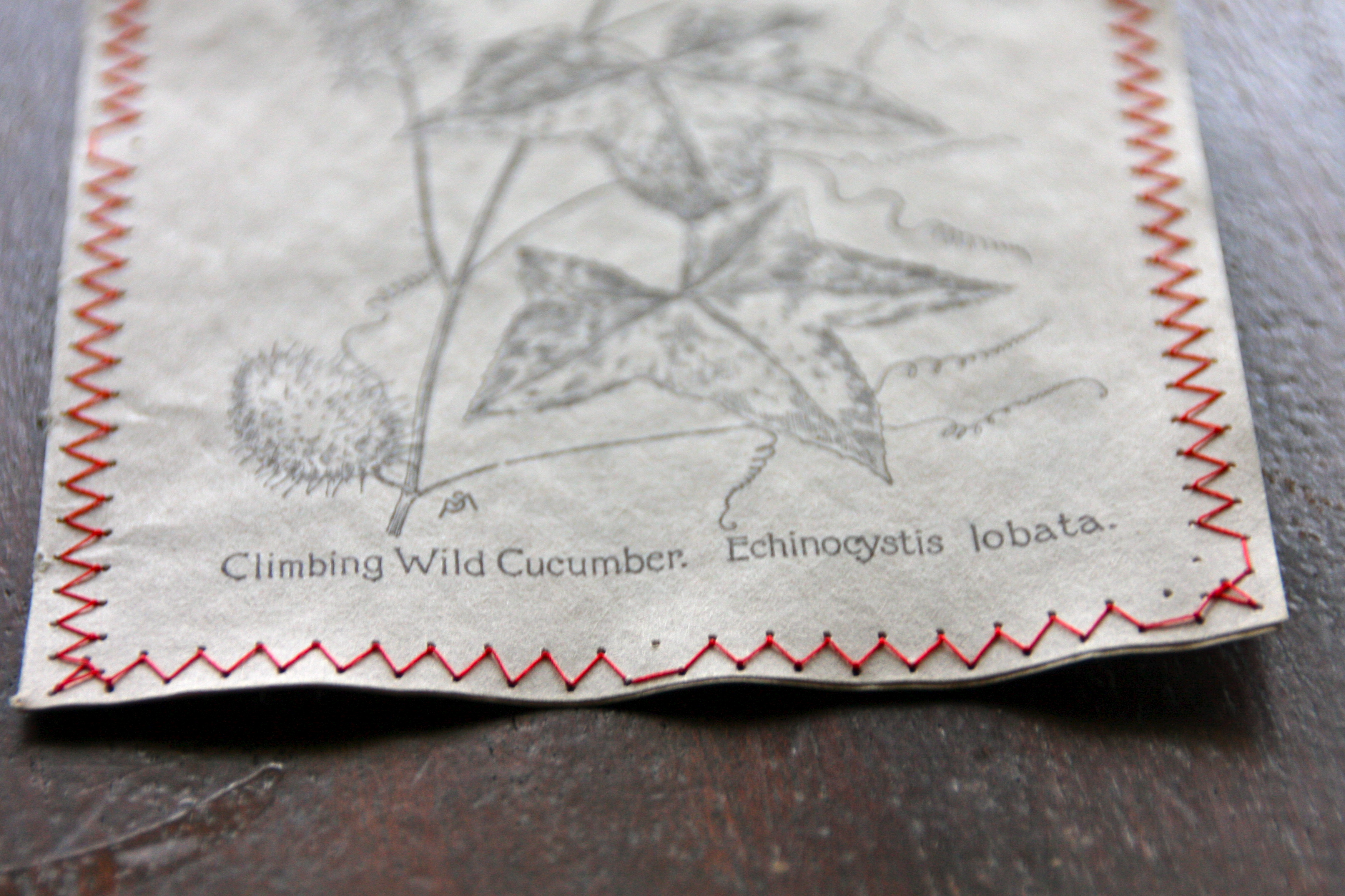
Each envelope is cut from a beautiful wildflower guidebook whose pages swelled and binding broke when it found itself sitting in the bottom of a box that found itself sitting in a puddle of water.

IMG_2121

The envelopes are all stitched – no glues, no staples – just thread.  Each set of eight envelopes comes with 10 sheets of recycled stationary.

$10.00 for a set of eight

If you are interested in getting a set of envelopes and stationary for yourself or as a gift for a loved one, just send an email to me and we will send you a Paypal invoice and put your purchase in the mail. (Shipping is included in the price)

You can contact me here:  aarongmyers@gmail.com

IMG_2122

If you love these envelopes, please take a moment to share this post with your friends and help us spread the word.  Thanks!

IMG_2110

IMG_2111


Screen Shot 2013-05-06 at 11.10.45 PM

Busy? Master Your Time

I have recently been working to create an online course to teach independent, self-directed language learning.  It’ll be a big project and I hope to have it up and running by the end of April.

In order to cut my teeth on the whole idea of course creation I decided to make a smaller course first.  This course, called Master Your Time, is all about getting more from your busy days.

You can try it out free for a time here: https://www.udemy.com/master-your-time/

Here’s the promotional video I made for the course.

More or Less: Choosing a Lifestyle of Excessive Generosity

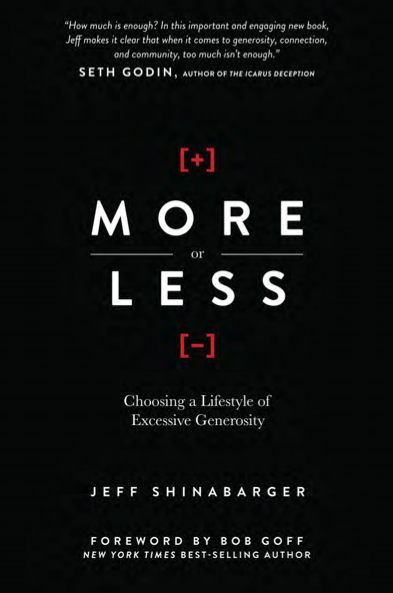
Screen Shot 2013-02-09 at 8.46.06 PMI just received a free copy of Jeff Shinabarger’s new book, More or Less: Choosing a Lifestyle of Excessive Generosity.  My receiving it free highlights one of the true advantages of the digital age – advanced copies of books are virtually free to give away and help spread the word.

I am excited about the book.  The endorsements and table of contents get me very excited. Living simply is a topic rich in the history of my personal journey and one that was put far back on the shelf when we lived in Turkey.

I’ll write a proper review when I finish it.

You too can get a free copy of the book if you would like.  [Click here to get yours.]

Now that we are working to settle back into life in the states, simplicity – living more with less – is a value I’d like to recapture and I am hopeful that this book will be part of that journey.

We’ve enjoyed nearly six months house sitting a grand home but will be moving into a new home at the end of the month.  We are looking forward to getting into our place that we can take a bit more ownership over, even as we rent to begin with.  We just today got a package in the mail filled with packets of heirloom seeds from Baker Creek Heirloom seeds.

Very Exciting.

[Sorry for the long intervals between posts.  Life is a bit crazy and I’m working really hard to develop the business over at The Everyday Language Learner.  I’ll try to be a bit more regular]

Would You Buy Don Miller’s New Book for $30.00?

I was reading a post by Andy Traub today which did a good job of introducing his readers to Donald Miller’s newest installment, Storyline, and at the same time bringing the discussion of pricing products into the picture.

The topic of pricing would not have come up of course had Storyline not been priced at $29.99.

A 95 page paperback workbook for thirty bucks!

I don’t want to get into whether or not Don’s new book is worth $30 or not – I love Don’s writing and believe that the value to be found in the those pages is probably is worth that price, and if it changes your life, it’s probably worth a whole lot more.

But I want rather to discuss pricing.

I am an online entrepreneur.  I am working to make a living through guide sales, affiliate links, an upcoming online course and through language coaching.

In all of that, I have to set prices on my products and services.

The world would say that you price products at the maximum price that the market will bear.

So we have music CDs that sell for nearly $20.00.

We have digital products by popular bloggers selling for hundreds of dollars.

And Don Miller can sell a 95 page workbook for $30.00.  (His tribe is big enough that he could have sold it for a lot more)

Pricing is based on a premiss – make as much money as you possibly can.

It is of course not the only premiss, it is far more complicated than that.  But it is a major factor.

That is the way of the world.  That is why I saw a headline a few years ago about 3M laying off 5,000 workers when their profits were not as high as expected.  They laid off 5,000 workers and they were profitable!?!

But I get that.  It’s business.  Business as usual.

It’s just that I can’t live by the premiss that the goal is to make as much money as I can.

First it doesn’t resonate with my sense of propriety.  Asking what is going to make the most money is not the right question for me.   Asking instead, What is the proper price for me and for my customers.

Second, I guess as someone who reads the Bible and has decided to believe it to be true and to both obey Jesus’s teachings and to follow the examples that I find in the pages, I can’t seem to get past 2 Corinthians 8: 13-15:

Our desire is not that others might be relieved while you are hard pressed, but that there might be equality.  At the present time your plenty will supply what they need, so that in turn their plenty will supply what you need. The goal is equality, as it is written: “The one who gathered much did not have too much, and the one who gathered little did not have too little.”

Again in the 30th chapter of Proverbs this is reiterated, albeit a bit differently.

“Two things I ask of you, Lord;
do not refuse me before I die:
 Keep falsehood and lies far from me;
give me neither poverty nor riches,
but give me only my daily bread.
 Otherwise, I may have too much and disown you
and say, ‘Who is the Lord?’
Or I may become poor and steal,
and so dishonor the name of my God.

I guess my struggle is that our pricing structures in some way reflect our hearts.  And I want my pricing to reflect a Biblical heart.

And boy is it a struggle.

Everyone always says that Christians’ lives should look different than the world.  I guess I had always missed the small print – except when it comes to making money.

I remember reading a biography of Rich Mullins.  He was a hugely popular Christian recording artist in the 90’s.  Superstar huge.  And yet amidst his fame (and fortune, but more on that  later) he moved to an Indian reservation in Arizona where he taught music to Native American Kids while living in a trailer house.

When asked about how much money he made from his music by a journalist, Rich responded truthfully that he didn’t know.  You see Rich had his studio send all of his checks to his church and had the church pay him a salary that was at the time, around $24,000 a year.  (Read about it here)

Rich, like my Bible reading habit, challenge me.

I don’t in any way want to walk in condemnation of others and how they price their products.  I price my products too and if I were to condemn, then the proverbial log is in my eye.

I guess I just want to see a conversation take place, to see some reflection and, to get some help in understanding it all myself.  I am trying to walk this out well and proper and in good conscience.

Rich Mullins and the Bible keep me uncomfortable though.  So uncomfortable that I do things like give all of the proceeds of my guide sales this month to Blood:Water Mission to fight HIV/AIDS in sub-Saharan Africa.  [read about it now]

Andy, in the blog post that prompted this exploration, ended his post by asking, “Would you spend $30.00 on a book?”

And for me it led me to my own question, “Would I charge $30.00 for a book?”

If you are looking for a great Christmas present for someone you know, check out Rich Mullins: A Devotional Biography: An Arrow Pointing Toward Heaven (That is an affiliate link).

Rural Housing

Rent to own in Irene, South Dakota.

The housing markets of rural America – at least in Southeast South Dakota – are quite different from those of our urban neighbors.

Net out-migration does that to a community.  The rules change.

Last week for example, in the neighboring community of Marion,  a three bedroom home with an attached two car garage and a large yard sold on auction for $17,000.  You read that right.

$17,000.

With no one interested in purchasing the home, it was probably picked up by a local who will turn it into a rental property.

Folks here sell their homes on auction because then at least then they can sell it.  Putting a sign in the yard, putting adverts in the paper and finding a real estate agent in no way guarantee a home will sell.

There are any number of homes in Freeman that are for sale and have been for several years now.  Most are quite nice and compared to city prices, relatively inexpensive.  But for our rural area, with so few people looking for a house to buy, they set empty.

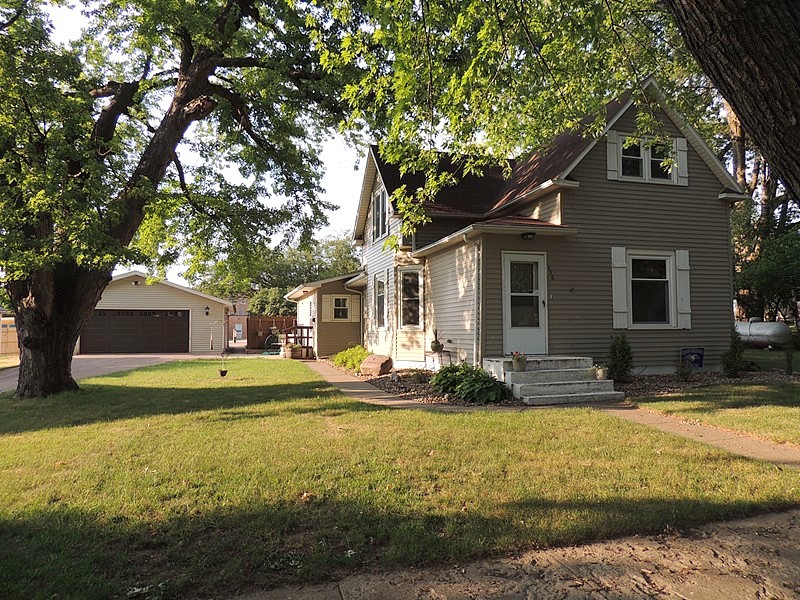
For us, we continue to look for our own home to buy or rent here in Freeman or the surrounding area.  For now, by the kindness of friends and the goodness of God, we have a beautiful home which we are house sitting.

It is a major blessing and gives us a few months to discern what our next step will be.

What has been your rural housing experience?

image

Propriety and Personal Economics

I read a chapter from Wendell Berry’s book Life is a Miracle last week that has set me to thinking about the questions we ask ourselves when endeavoring to live a “successful” life and specifically when we think in terms of personal economics.

Berry’s second chapter, Propriety, is no walk in the park, but with the patience to read and possibly to re-read certain sections, I stumbled into a deeper understanding of an issue I’ve long wondered about and questioned.  It is also not directly written toward the idea of personal economy but is much larger in scope taking in technology, innovation and especially, science.  From it however, I’ve found new insight and begun to ask new questions.

It seems that modern American ideals of personal economics are driven by two main questions:

  1. How much do I make? (the goal being to make more and more)
  2. How much does a service or product cost me? (the goal being to pay as little as possible)

These are the two questions that drive personal economics for most with the goal being to earn more money – preferably a lot more – than is spent.  Money can then be saved or spent however one wants which most believe leads to personal happiness.

But this, even as I have acquiesced to it in my own life, has always bothered me.  It seems a short-sighted and somewhat selfish way to live that eventually comes back to haunt us all.

We have bought into the whole notion of upward mobility and the American dream without stopping to consider the ramifications.  We have lived for the pursuit of individual happiness above all else.

How does this work out in life?

  • We drive thirty miles to shop for our groceries where it is “cheaper” rather than getting our groceries from our local grocery store.
  • Our farms get bigger and bigger so we can grow more and more and we no longer have any neighbors.
  • We order online from the cheapest distributer rather than from a local merchant.

And of course in rural America we are paying a terrible price for our reliance on these two questions, these two bastions of capitalism.

  • Our grocery stores are closing down.
  • Our schools are closing.
  • Our churches are closing.
  • Our towns are dying.

Please don’t get me wrong.  I am not against capitalism – I think it is perhaps our best system to live within as far as economics go.  But capitalism based only on t the two goals of making more money and paying less money will always lead to the breakdown of communities.

And that is why, as Berry asserts, a third question must be added and that is the question of propriety.

Is it proper?  Is it appropriate?  Is it good for me and for the community?

Without this question guiding us we will always strive for more rather than enough.  I may save a few dollars paying online, but what am I loosing?

A few months back I stumbled upon a journal from one of the local farmers around our area in Southeast South Dakota.  In it she recorded a bit of each day in that year – 1968.

It snowed a lot that year and so snow removal sets the theme for much of the early months.  The drakes were butchered regularly.  Preparations were made for planting.  Gardens were tended. Doctors were visited.  All the normal mundane things that have happened on farms from time immemorial and many of which still happen today were recorded in her journal.

But there was one recurring entry that impacted me more than any other.  And it went like this:

  • We went to visit the Smith family tonight.  Had a wonderful time.
  • The James family visited Sunday afternoon.
  • Mrs. Frank Thomas came with a pie.  We had a nice visit.

I’ve changed the names to protect the innocent but the theme persisted all year long.  People were coming to visit and going to visit on a weekly basis.

The idea of community was alive and well.

And it is something that, at least in our rural communities, is being lost.

There are many factors we could blame for this of course and I won’t be so naive as to say that our economic choices are the only cause.  But they are part of the cause.

When we begin to ask what is proper, what is appropriate and what is good for the community before we look only to making the most money or getting the cheapest prices, then we will begin to make the choices that will help to sustain our communities.

And that will be good for us as well.

—-

You can find Life is a Miracle at Freeman Public Library like I did, at your local bookstore or at Amazon*.

Read a great review of Life is a Miracle at Against Nothingness.

*Affiliate Link

Why I Use Affiliate Links

If you’ve been following along here at Cobbled Together you will know that one of the topics I wish to write about is my effort to “cobble together” enough income for our family to live on.  For us – at least for now – it’s a little bit here and a little bit there and it’s an adventure to create a life based on our values and our goals for this next season in life.

If you’ve been reading, you will also notice that I often mention something called affiliate links. In today’s post I’d like to take a moment to explain:

  1. What an affiliate link is and how it works.
  2. Why I use affiliate links.

What Are Affiliate Links

Webopedia defines affiliate link in this manner:

In affiliate programs, it’s a special URL that contains the ID or username of the affiliate. This URL is used by the advertiser to track all traffic the affiliate sends to the advertiser’s site as a part of the affiliate program.

Many businesses have affiliate programs.  Amazon Associates is one that I use the most when I write about books but I will also from time promote products from individuals as I did when I wrote about Tent Bloggers Blogging Starter Kit which I also promote on the right sidebar.

The basic gist of these programs is that when someone clicks on a link on my site, a program tells the affiliate program where the new customer came from and then gives a percentage of the sale to me should a purchase be made.

So, if you were to click on one of the book titles in one of my posts, you would be directed to the Amazon sales page.  If you were to purchase that product (or any other product within fifteen minutes), I would get somewhere between 4% and 7% of the sales price.  The price in no way changes for you the customer, I just get a commission so to speak.

While Amazon pays out 4% – 7%, other programs pay out more.  Those hosting their digital products at ejunkie for example pay 50% of the sales price.  This is a great deal for me both as a seller of products and as an affiliate partner for other people’s products.

The aforementioned Blogging Starter Kit is this way for example.  The e-book costs $19.99.  If one of my readers visits and makes the purchase, John over at Tent Blogger would be paid and then would send me 50%  –  $9.99.

As another example, I sell a number of ebooks for language learners from my other site, The Everyday Language Learner.  These ebooks range in price from $2.00 – $20.00 and come as pdf files or bundles of products including pdf files, audio and video files.  In order to streamline the selling and buying process, I host all of my guides at ejunkie, an online store for digital products.  At ejunkie, I also have an affiliate program that you could join.  I too pay a 50% commission.  This works out for me because it gets my products in front of a lot more people.  It is a win-win situation.

Why I Use Affiliate Links

As we returned to South Dakota and as we have laid out a rough vision for what we want our life to look like and what we want to be about, the way forward has led us to not pursue full-time employment working for someone else.

That would leave too little time and energy for accomplishing our goals.

But we still need to earn enough money to pay the bills and feed the kids.  To do that we are working to grow my consultation and writing business online at The Everyday Language Learner, The Turkish Listening Library, Stories from Turkey and Ingilizce Ogrenmek (Learning English).

Income is generated at those sites through the sales of guides for language learners that I have written (you can listen to the audiobook version of my main guide for $3.99 [not an affiliate link]), through Google Adsense and through affiliate links.  Occasional advertizing opportunities also arise and I also offer the Ten Week Journey language course on a donation basis.

I also work as a language coach, which is what I really want to focus on.  This is accomplished over the Internet as well through Skype calls.  Helping people learn languages more effectively, efficiently and to have more fun doing it is what I love to do.

It’s a little bit here an a little bit there and as strange as it seems, it’s working.  Slowly income is growing.

Affiliate links are a part of the overall strategy.   In the old economy it seemed that for every winner there needed to be a loser.  Coca-Cola ran an ad during the nightly sitcom.  They won exposure.  You lost thirty seconds of your time.  Interruption marketing is what Seth Godin calls it.

But with affiliate links, I can write about the things I would naturally write about anyway, things I enjoyed or found helpful, things I would recommend to my friends anyway and irregardless of whether I made a few pennies on it or not.

So that is it. Affiliate links are one part of the quest to pull together a sufficient income to live.  Part of my vocation is that I am a writer.  Affiliate links create a new avenue to leverage that to earn a little bit of money.  Not from you the reader, but from the distributors of products.

Learn More

Stuff

Mental Energy: Take? Sell? Store? Give Away? Trash?

“Americans used to be ‘citizens.’ Now we are ‘consumers.”
― Vicki Robin

My wife is upstairs now trying to find the right recipe for getting our “stuff” back to America when we return on the 20th of this month.

We have already sent a number of bags back with friends but now are in those last stages of sorting, pitching, packing and generally trying to do the best job to get most of what we need and some of what we want back to South Dakota.  We’ll be leaving a lot behind.

You could look at this problem in one of two ways.  Either:

  1. The airlines have cut the number of bags you can check on international flights to one bag per person – that would be four bags for our family.  You can purchase more bags if you wish.  Or –
  2. We have too much stuff.

Consuelo and I actually like this part of the process of moving.  We like the purging that happens, the returning to our senses and to the essentials.  We have talked a lot about this move and desire to make our return to the U.S. a modest one.

I have a theory that we are in some way slaves to the things we own.  This isn’t always a bad thing, but it is a reality.  If I own something, it in some way owns me.  It requires my time, my care, and my mental and emotional energy.

Again, this isn’t always a bad thing.  Often times the payback is well worth the exchange.  Our buying a car here in Istanbul was one of those that was well worth the time, energy and money to own.  I only wish now I’d bought it sooner.

But the things we own will make demands on us. They will take our time.  Our money.  Our emotional energy and our mental focus.

And other things will need to be sacrificed.

“If you live for having it all, what you have is never enough.”
― Vicki Robin

As we return to the states, we want to be intentional about being slow to acquire more stuff. We’ll need beds of course and a bit of furniture, but really, we NEED far less than we think.

Most of our neighbors here in our apartment eat as a family seated on a blanket spread out on the living room floor.  We call it village style and it is the way Turks have eaten for centuries – like most cultures perhaps.

Consuelo and I were talking last night about all of this and remembered that less than 100 years ago, most Americans had a few pairs of work clothes, one set of “Sunday Best” clothes and little else.  It was enough.

Enough.

Enough seems to be a word long lost on the west and yet it would seem to be a pretty defining Biblical principle.  I certainly have my weaknesses, those things that I think I need, those purchases I make to meet an emotional need and those products I desire because I think they will make me cool.

But it is not really about the stuff.  It’s about the attitude, about the direction and leanings of the heart.  It is always a heart issue.  I am reminded of a story about John Wesley:

A distraught man frantically rode his horse up to John Wesley, shouting, “Mr. Wesley, Mr. Wesley, something terrible has happened. Your house has burned to the ground!” Weighing the news for a moment, Wesley replied, “No. The Lord’s house burned to the ground. That means one less responsibility for me.”

And so as we return to the states, I want to avoid filling my life with lots of stuff and simultaneously hold less tightly to the stuff I do own.

That way I’ll have more left over to focus on the things that truly matter.