So This Is The Other Side Of Wonder

“So this is the other side of wonder.” 

This was the first thought that crossed her mind as she stepped through the doorway from life to death to life beyond. Glory and light in harmony and pure delight and everywhere, goodness, truth and beauty. Everything was right and everywhere joy beyond joy beyond joy which she knew now would roll forward as an endless wave which she could ride for all eternity. 

She looked for Virgil, but that story was below. She realized there was no need for a guide. All was light beyond light and grace flowed from love. There was shadow, for it is in the contrast that beauty lies, and everywhere was beauty, but there was no darkness. And all the monsters beneath the bed of her heart had fled, for the light of love had chased fear and pain and anxiety—even death itself, away.

Now as she walked forward there was and would forever be, only wonder.

This was a story written in response to writers prompt #140 at Writer’s Digest (https://www.writersdigest.com/your-story-140)

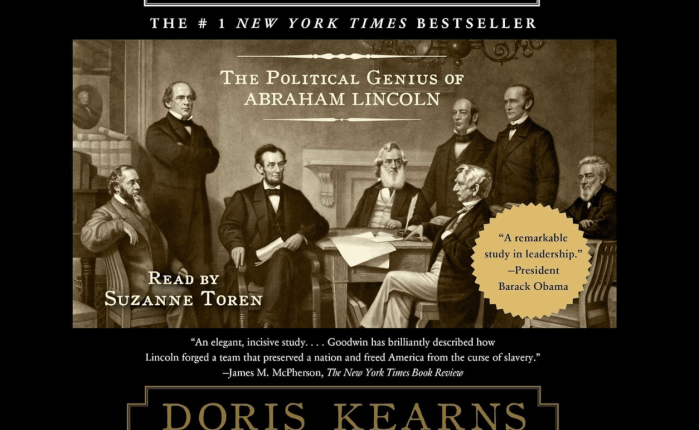
Book Review: Team of Rivals: The Political Genius of Abraham Lincoln

Book Review: Team of Rivals: The Political Genius of Abraham Lincoln

I recently took a solo trip to Kansas from my home in South Dakota and so an audiobook was in high order. Being in the mood for some non-fiction about history, I found a book about Abraham Lincoln called Team of Rivals: The Political Genius of Abraham Lincoln.

I’ve long been an admirer of Lincoln and his leadership through perhaps the most harrowing time in U.S. history which began before he was even inaugurated as president. He was not a perfect man but he seems to have had a rare gifting of leadership that, upon reflecting on our current moment, we could certainly learn from.

Team of Rivals, written by Doris Kearns Goodwin, focuses on Lincoln’s confounding and audacious move to appoint all three of his Republican presidential rivals to top posts in his cabinet. To run for president requires a rare combination and capacity, ambition and ego and while there are political reasons to appoint one’s rival to a cabinet position, something Lincoln understood only too well, it seems he appointed them for a far more important reason. Later, as the war raged on, he would appoint Edwin M. Stanton, one of his harshest public critics, to the post of Secretary of War. It seems that beyond the politics, Lincoln believed that in order to lead well, he would need to welcome and depend on the debate of ideas within his cabinet to ensure that he came to the very best decisions for the country.

Lincoln did not want yes men. He wanted the best men.

The book highlights as well the deft touch with which Lincoln was able to work with each of these men’s egos, finding their strengths and depending on them while earning their trust and admiration. William H. Seward was devastated by his 1860 loss to Lincoln but jumped at the chance to serve as Secretary of State, assuming wrongly that he would be able to guide other cabinet choices and lead the country with Lincoln as a sort of figurehead president. His disdain for Lincoln slowly but surly changed to deep admiration and respect and in the end he became one of Lincoln’s staunchest supporters even as he continued to offer fierce debate in all major decision – just as Lincoln wanted.

First Reading of the Emancipation Proclamation by President Lincoln by Francis Bicknell Carpenter (1864)

Of the others appointed to his cabinet, only Salmon P. Chase never came around to loyalty and respect for the president. He continued to harbor a deep sense of superiority as well as a deep ambition to be the Republican nominee in 1964. As another example of Lincoln’s tremendous leadership, he kept Chase in his position as Secretary of the Treasury, a position he excelled at, far longer than anyone else would have put up with the secretary’s shenanigans. He chose to endure the thorn in his side in order to capitalize on Chase’s unique skills with managing and finding ways to raise money for the Union cause. It was a fitting end to Chase when, in June of 1864, he sent Lincoln a letter of resignation over some perceived slight – something he’d done three times prior – with the smug confidence that Lincoln would beg him to stay. Lincoln, much to Chase’s surprise, did not respond but rather replaced him with a new Secretary of the Treasurer and allowed Chase to find out through the grapevine of gossip and news.

Goodwin does a masterful job of winding through the story of the primary and into those first heady days of the new cabinet, the new presidency and the new and terrible war. She writes with deep attention to historical detail, an insight into the character of Lincoln and these men and with a strong storytelling ability that makes this book intriguing, insightful and easy to read.

It is helpful to read history when wading through the turmoil of our current experience. The rancor, doomsaying and fear mongering of today’s politicians and pundits trying to convince us that democracy as we know it will end if their opponent wins, seems laughable in light of all that Lincoln faced in 1860. This book brings a kind of levity to our current partisan atmosphere but also gives us an example of what true leadership really looks like. We would all do well to read Team of Rivals: The Political Genius of Abraham Lincoln for it’s lessons on leadership and grounding in reality.

image credit

Brainwashing Ourselves Into Incivility . . .  And A Way Out

Brainwashing Ourselves Into Incivility . . .  And A Way Out

A person’s worldview, the lens through which they make sense of the world, was historically shaped by one’s immediate environment; the family and community, religious institutions and local schools, neighbors and friends. Families, communities and local influences were in turn shaped by regional factors and those regions were situated in a larger nation or people group. Thought leaders of course produced articles and books filled with new ideas that found their way into the shaping of thought so that worldviews grew and changed bit by bit and occasionally, with the publication of a pamphlet like Thomas Paine’s Common Sense, quite quickly. Something like Common Sense could influence and shape worldviews with unprecedented and powerful potency. Even these more powerful transformative factors however were received and discerned within the conversations and dialogue of local communities.

This all began to change with the radio and then the television and more recently the Internet which each brought abundant news and ideas from all corners of the world devoid of any local context. Radio and television were limited and so most of the stations we watched or listened to needed to necessarily find a middle ground of discourse and thought. This began to change with cable television and the rise of ideologically driven talk radio but went into warp speed with the advent of the Internet. Now there is an ideological corner of the Internet for everyone and we are no longer being shaped by the conversations and debates we have with people we know and trust but rather from a talking head we’ll never meet. With cable news to feed us our ideologies and Netflix to keep us entertained, there’s no need to head downtown on Saturday night to shoot the breeze with our neighbors, some who might be Democrat and others Republican, some Presbyterian and others Baptist. When that was the case, we learned to be civil, to agree to disagree and to see the other as a neighbor and a part of the community to which we belonged. 

When we allow ourselves to be formed in the ideological echo chambers of our own narrowing perspective, our neighbors become the enemy and civility turns to toxicity. In a bygone age, if our children talked about people they disagreed with disrespect and contempt, they would have been, to use a colloquial term, “taken out behind the woodshed.” When we complain about kids these days who don’t have any respect, we should look in the mirror – they sound like the talk show hosts we subject them to on the way to school and if we’re honest, they often sound a lot like us. And of course this is the problem. We’ve been brainwashed into thinking it’s all normal. Brainwashed too by locking ourselves inside echo chambers where we constrict all news to one or two tightly controlled sources. I use the term brainwashed because we all understand that is what happens in places like North Korea where the government tightly controls all media so her people only hear tightly scripted and controlled messages that promote exactly one ideology. And if we call that brainwashing then what we are doing to ourselves might aptly be called “self brainwashing.” And this seems a dangerous place to be headed as a society.

I wrote about this a bit in my article, The Danger of a Single Story . . . and a Billion Stories Too but today I want to offer a few thoughts on finding our way out of our echo chambers. This seems especially important as we head into a contentious and challenging election year and for full disclosure, I’m mostly writing to exhort and encourage those who would call Christ both Savior and Lord.

Sabbath

The Biblical word Sabbath means to cease and ceasing is an important place to begin. Sabbath of course refers to one twenty four hour period to rest and meditate on the things of the Lord, but choosing to limit intake of news in general and especially the type of hyper partisan news and opinion that so fills the Internet is an important choice we can make. The things we allow our minds to dwell upon are the things that will shape our worldview and thoughts about others. It’s important to take an honest assessment of the media sources we are listening to and watching. What are they forming in our hearts and minds? Is it fear? Stress? Contempt toward a certain group of people, people created in the image of God?  If so, we probably need to turn it off.

Feast

As we decrease the amount of media we listen to, it creates an opportunity to increase the amount of edifying and helpful content that will lead us to be better listeners, more civil in our discourse and in general, just nicer people. One thing I did last year was read through the entire New Testament during Lent. I read about four chapters a day and completed everything except Revelation before Easter. Immersing myself in the Biblical story allowed the scriptures to be the dominant voice shaping how I think about the world.

Two books I want to read this year are Crucial Conversations and How to Know a Person, both of which I’ve heard a lot about when it comes to learning again to talk with people who disagree with us. Amusing Ourselves to Death is an old book but has much to say about the power of our entertainment and media saturated lives. Another thing I’d like to read this year is a good biography of Abraham Lincoln. No president lived through more contentious times than he did and he did so with civility and without resorting to the demonization of his enemies. If anyone knows of a good biography, let me know.

Most of the podcasts I listen to are sermons by Tim Keller or podcasts focused on the great commission and missions, but I do also listen to a few political podcasts. The two I’ve turned to time and again feature a panel composed of a conservative leaning journalist, a liberal leaning journalist and the host who moderates robust conversation. I’ve appreciated being able to hear them dialogue and discuss issues they often disagree quite strenuously about but do so with a sense of respect for one another.  Left, Right And Center and Matter of Opinion are ones I listen to most often.  

A helpful source of daily news has been The Pour Over, a short summary of each day’s news with Biblical reflection. It doesn’t overwhelm with opinion framed as news and it  focuses simply on giving a summary of the day’s biggest news items. It can be listened to as a ten to fifteen minute podcast or as a daily email.

However you chose to respond, Justin Whitmel Early gives us a clear reminder of the reality we live in and a way forward when he says, “We live in a world of competing types of formation, streaming like busted faucets everywhere we look. We are guaranteed to be formed in consumption unless we ruthlessly pursue curation.” Curation – the process of selecting and organizing the content and information we read, listen to and watch is an important way forward. We have to be intentional in curating what we read, listen to and watch or we will be unintentionally formed, and we probably won’t be formed in the fruits of the spirit. What we feast on is what will form us.

image credit

The Daily Uniform

The Daily Uniform

While I’ve always – as most do – wanted to dress in ways that suited my personality and sense of style (something my teenage daughter would argue might not exist), I’ve recently adopted a simpler dress code that, with my daughter’s approval, we call the uniform. It is not exactly unique or creative but it does make the morning choices easier. It’s an idea stolen from Steve Jobs and promoted in loads of books on productivity.

My mornings are a simple choice between the two pairs of blue jeans I own and a pile of plain T-shirts, mostly blacks and grays and grayish blues. On cooler days I’ll throw on a gray zippered hoodie that I borrowed from my son’s closet after he left for college. Simple. Easy. And very comfortable.

image credit

NYC Library

NYC Library

The air is moist with knowledge,

  With hundred year old thoughts,

With dreams read and created and 

  Drunk down in droughts.

An edifice of bindings encase table and chair,

  Books barely opened as data flys through the air.

Laptops lie open,

  Books lie entombed,

    Still few words are spoken

      In the gentle quiet of

        The third floor reading room.

The ghosts of the past

  Give the present a kiss

As I wonder what’s been lost 

  In our media bliss.

November 25, 2019

50 and Climbing

50 and Climbing

This weekend I’ll turn fifty. I’ve always enjoyed my birthday; not so much the celebration but rather the thought of getting older, of hopefully getting wiser and becoming a better person, someone who is increasingly living in the understanding of how to to live a good life, a life that pleases God and serves others. I’ve never looked back and wanted to be a certain age again – I’d not mind my thirty year old body but I’m glad I’m not that same person anymore. Timothy Keller once said that, “Your future self will always see your present self as unwise, immature and foolish. That means you are currently a fool.” It’s a helpful perspective to carry as it keeps humility at the top of a persons mindset.

Mostly I’m excited to have made it this far, to realize that life remains an adventure, that I am mostly still healthy and active. I’m still learning and growing and enjoying life. I’m still hopeful and encouraged that, in Christ, my life is filled with purpose and meaning and is more often that not, fulfilling. I have few regrets. My wife is amazing, my kids are both great. Fifty is good and I’m excited to cross over on Sunday.

It seems a bit strange, but I am happy that I am not too bothered by the reality that I am now mostly likely closer to my death than my birth. I doubt I’ll have another fifty years; I could of course, but I doubt it. Every day is sacred, they all have been when you think about it, but with aging this fact sets in as a more tangible reality.

Here’s to fifty. Here’s to the climb. I pray it keeps going up, that I continue to see the hope in every moment holy, that my life shines as it ages and that I see the goodness of God in all that comes my way.

link

Short Story: The Grace of Grief

Short Story: The Grace of Grief

The old man walked into Cost Cutters behind me and as I did, checked in to get a haircut and then found his way to one of the gray, plastic seats along the wall. We made eye contact, shared a nod of greeting. I opened up a book I was reading on my phone. He sat, taking in the surroundings, watching for clues to the room, sitting in the silence of his own thoughts. He slowly unzipped the blue jacket he was wearing and shifted to get comfortable. The snipping of scissors and the happy chatter of hairdressers and clients filled in the cracks of our shared presence. I had but to wait for my turn, for one of the ladies to come and call out, “Aaron.”  I’d stand then and head back for my turn in the chair and the chatter. 

But before my name could be called another old man appeared just ahead of the lady who had just finished cutting his hair. She walked behind the counter, he in front and, and as he struggled to pull his wallet from a back pocket that had moved beyond the reach of rusty shoulder joints, asked with a wrinkled, mischievous grin, “Do I get the senior discount with that?

I and the other man shared a chuckle at the interaction as the lady grinned back, “I’m afraid not today.”

The man in the gray chair, feeling a sense of camaraderie with a fellow gray hair joined in, “We’re not old enough for a discount yet, are we?” I wondered if these two knew one another, old friends who’d stumbled into one another at the barbershop. But the man at the counter turned, slowly shuffling one foot and then the next below a body that no longer twisted with youth. He nodded a greeting to this stranger and said, “Well, I don’t know. How old are you?

The man four chairs down from me replied with a proud, knowing smile, “Seventy seven.

The man at the counter, now with wallet in hand, looked down as if doing math in his head. “I’ll be seventy seven in four months.” he finally replied, handing a twenty to the lady at the register.

The man who’d asked adjusted his John Deere baseball hat and then a new thought found its way into another question, “Do you remember when we could get a haircut for a dollar?” It was an effort toward commiseration over living lives through shared decades. The other man stood, still and silent now, wallet open in his left hand waiting to receive the change clutched in his right. The smile had left his face. After a moment, he shoved the money into the wallet and struggled to get it back into his pocket. “I guess I don’t remember. My wife always cut my hair. I was just twenty one when we got married so I never really went to the barber.” His voice was a quiet tremble. “I lost her six years ago.”  

The other man took his hat off then. His hair was thinning and he looked down into his lap. I thought he might say he was sorry for the other’s loss but looking up with sad eyes he replied, “I lost my wife last year.” The pain of shared loss hung in the air.  

The man standing alone at the counter was first to speak. “I’m sorry for your loss.” He looked down then fumbling with a button at his jacket. He let out a quiet sigh. “It’s hard. It gets better but it’s still hard.” Looking back up he took a step closer. I watched and waited. The lady behind the counter waited and watched. 

The man in the chair sat up a bit and pulled his hat back on, attempting to pull himself together, as if to meet grief with grief, as if to say thank you for understanding. “It’s been a lot harder than I would have imagined.” He looked up with questioning eyes. “What’s been the hardest thing for you?

It was a question that seemed expected, as if this were a question every widower asks himself. In reply the other took another step forward. They were within a few feet of each other now, moving into one another’s stories, feeling one another’s pain. “I suppose one of the hardest things is the grocery store. I’ll be pushing my cart, all alone and I’ll come around a corner and there’ll be an old couple in front of me and they’ll be holding hands. They’ll be together and I’ll just be alone.”  

The other nodded beneath his green hat and said again, “It’s hard.

One man standing shoved his hands deep into his pockets. Another, sitting, sank back into his chair a little. They nodded at one another. The old man standing in the middle of the white tiled barbershop entry took one final step forward, reached out his hand. The old man sitting leaned forward, took the hand in his own and they held their grip for a long moment.   

The man standing before the other released his grip saying, “Well, hang in there. Every once in a while you’ll notice it’s a little easier. It’ll still be hard a lot of days but some days will be easier.

Thank you” A sense of calm mixed with loss filled sad eyes. He had been heard and understood. With that the man turned and hobbled out the door. I watched him go. The hairdresser behind the counter watched him go. The grace of grief lingered broken only by the sound of my name being called, “Aaron.”

photo credit